
The long-eared owl is a shy, predominantly nocturnal, medium sized owl that can look long and thin. With, mottled brown feathers, long wings, orange-red eyed and long “ear tufts” on its head. The “ear tufts” are not ears but feathers that the owl can raise when it is alarmed or to make itself looking bigger.
Long-eared owls breed widely across the UK, with fewer birds in the southwest and wales. It is estimated that there are around 3,500 pairs of long-eared owls breeding in the UK. They prefer coniferous forests, plantations and mixed woodlands, favouring sites with dense cover near open areas where they can hunt. Long-eared owls typically nest in old stick nests of other birds (often a crow or magpie) but occasionally nest in tree hollows, on the ground at the base of tree or under a bush.
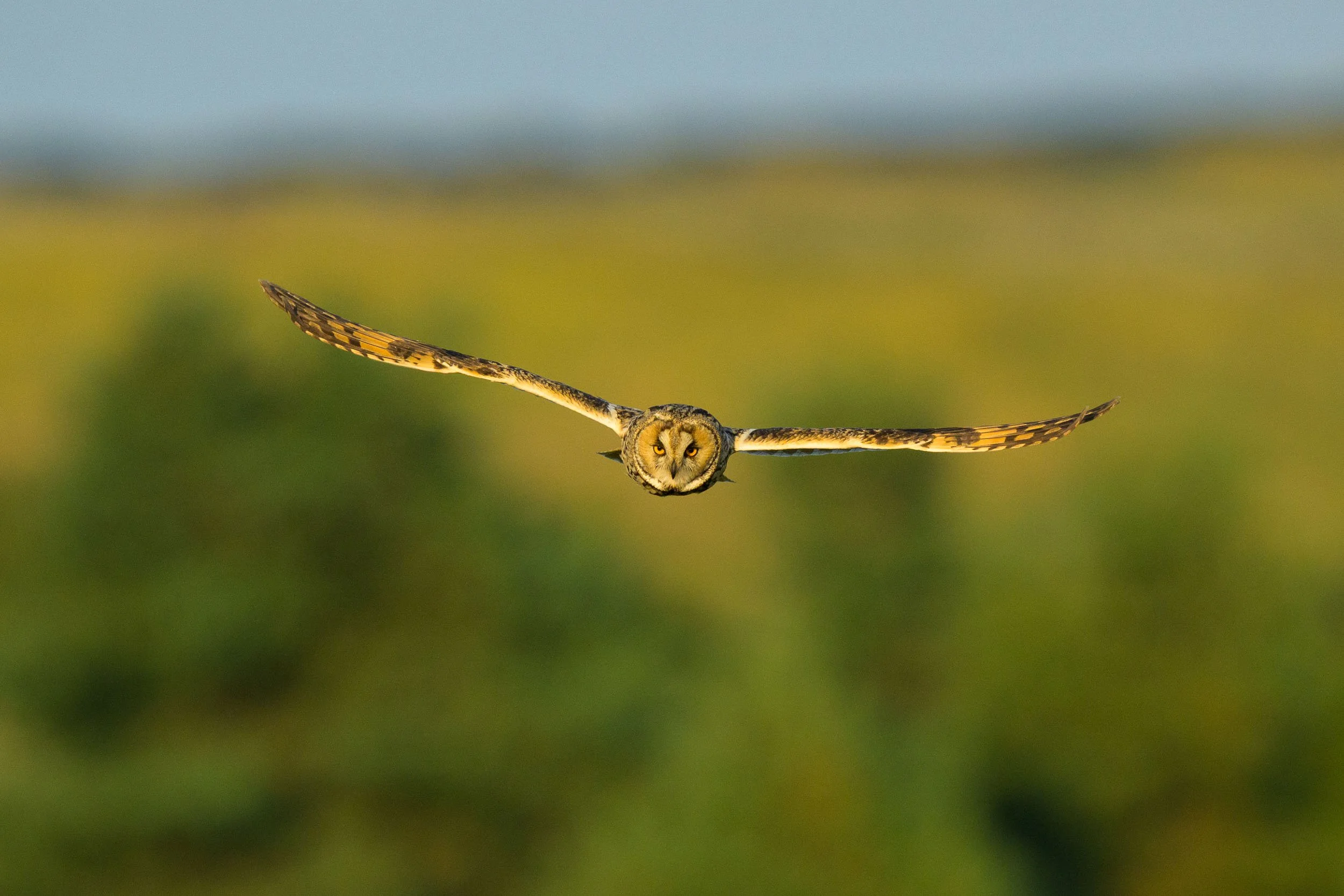
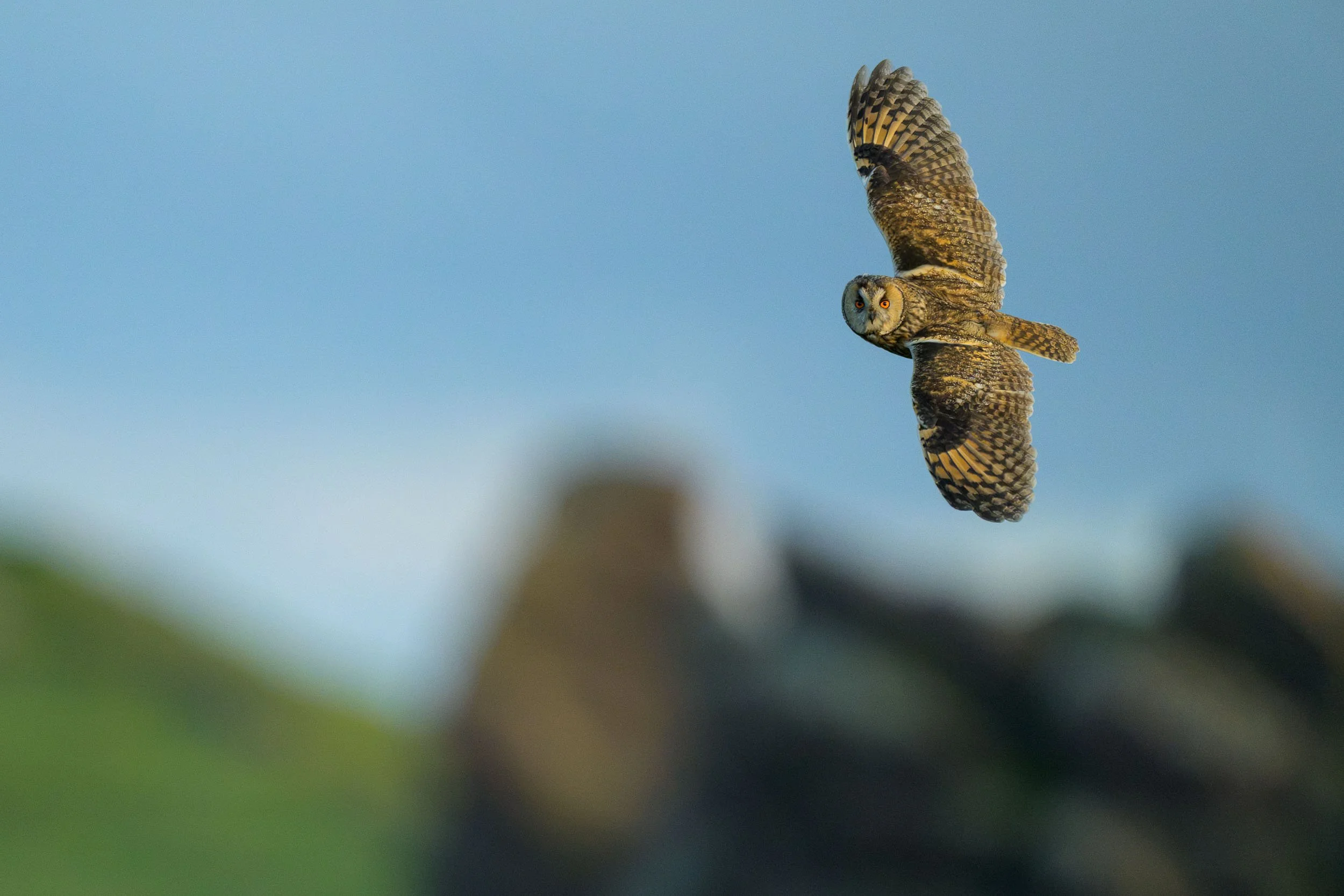
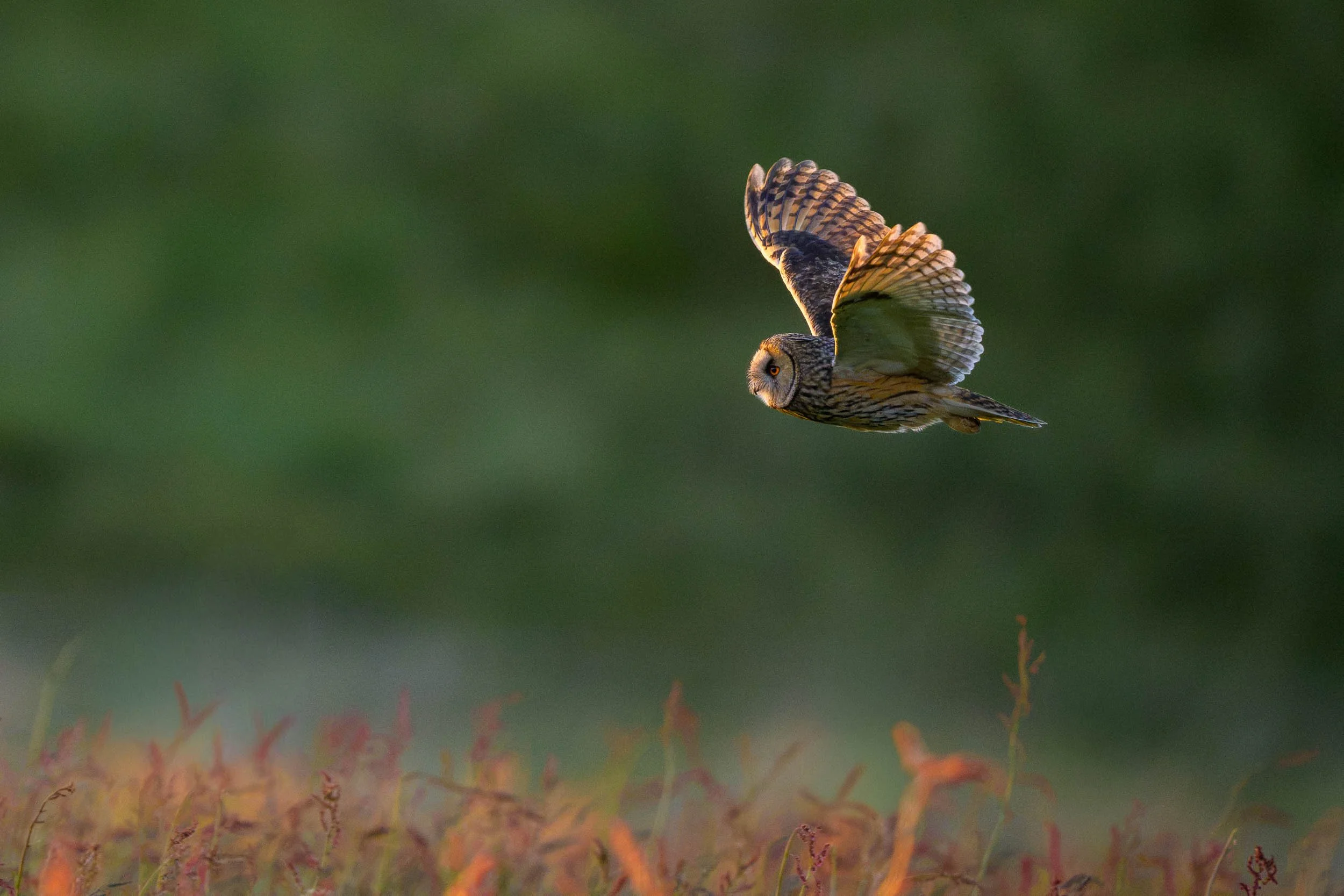
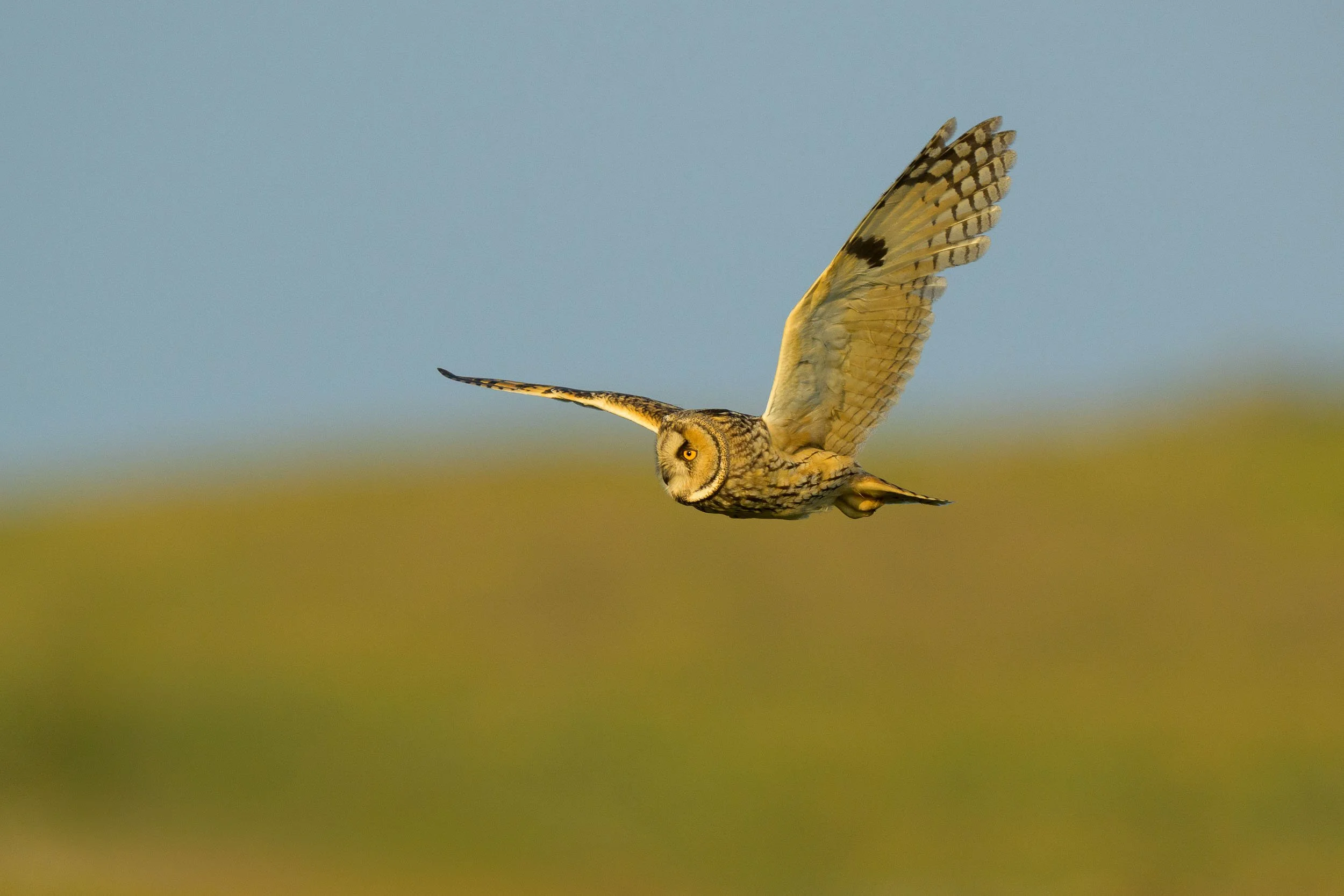
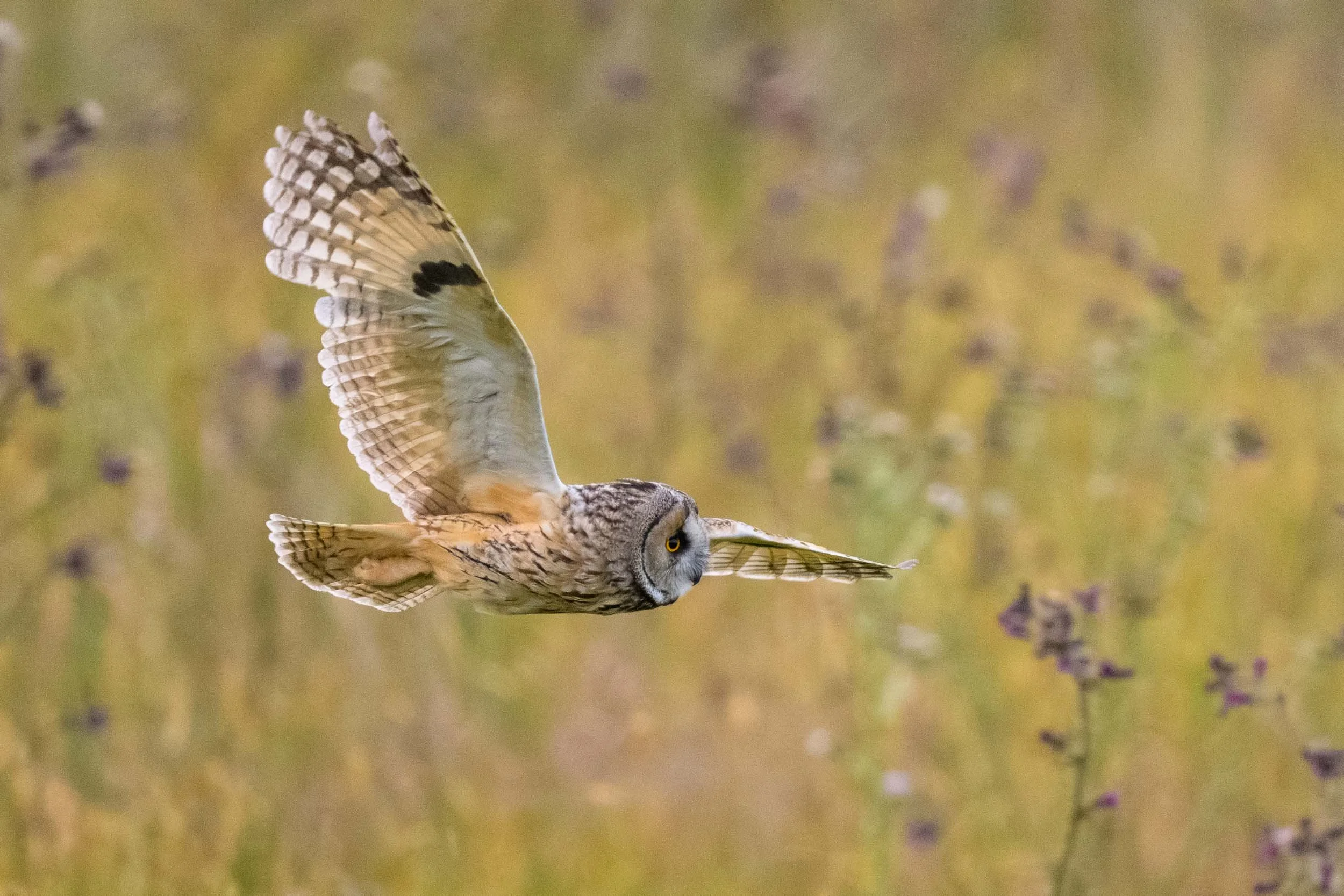
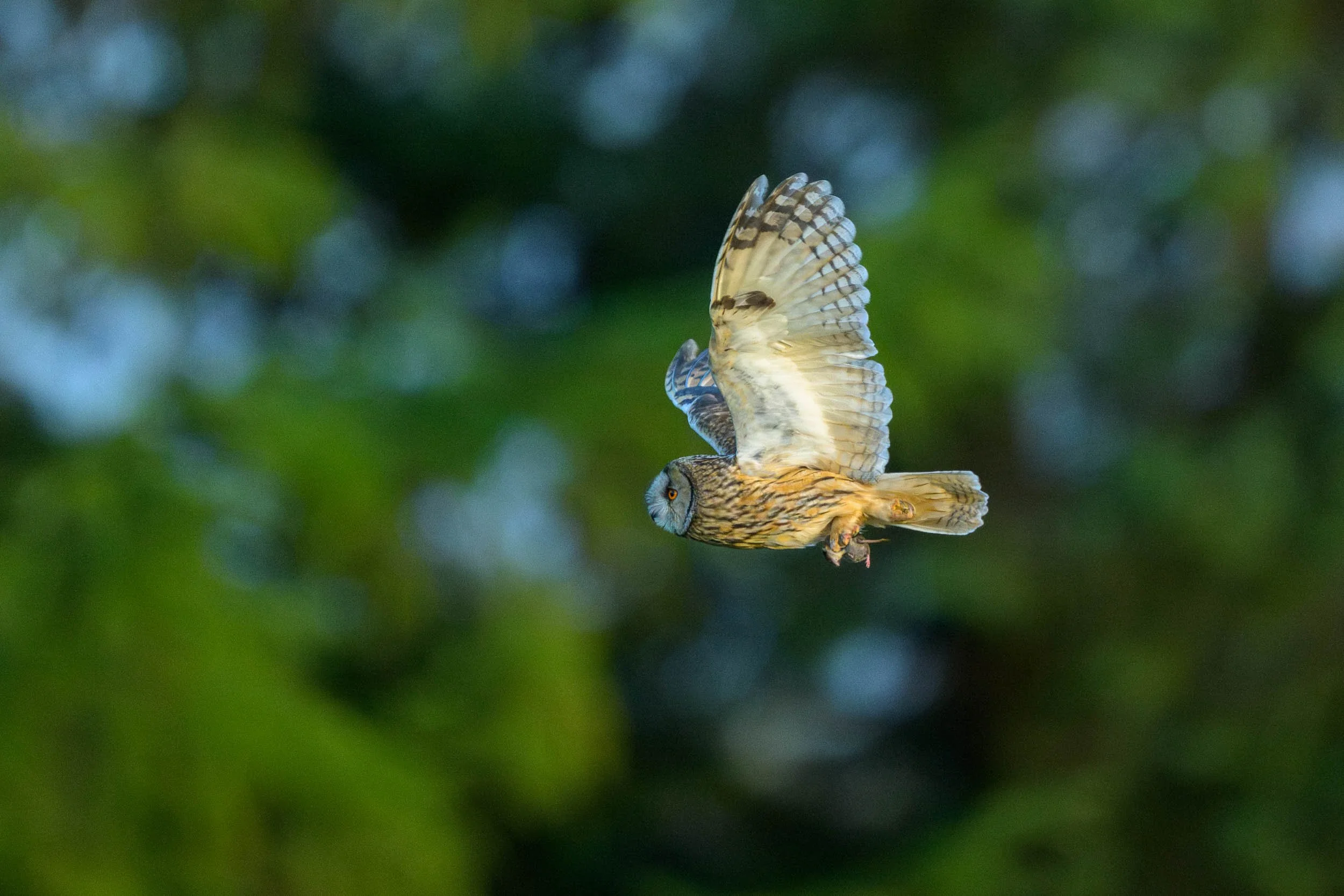
The territorial call of the male long-eared owl is a soft “hoo”. Young long-eared owls beg for food by using a sharp squeaking whistle that sounds like a squeaky gate.
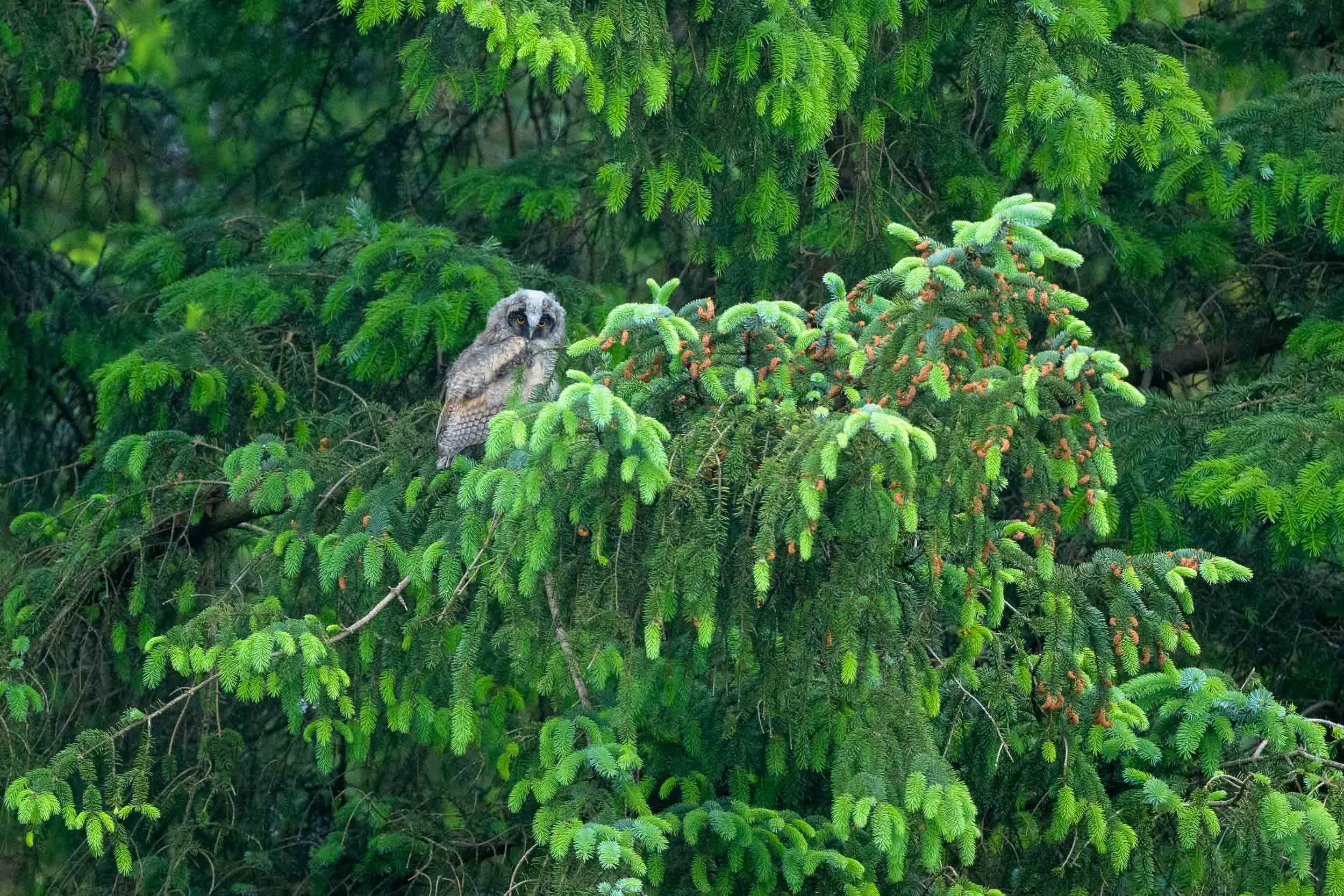
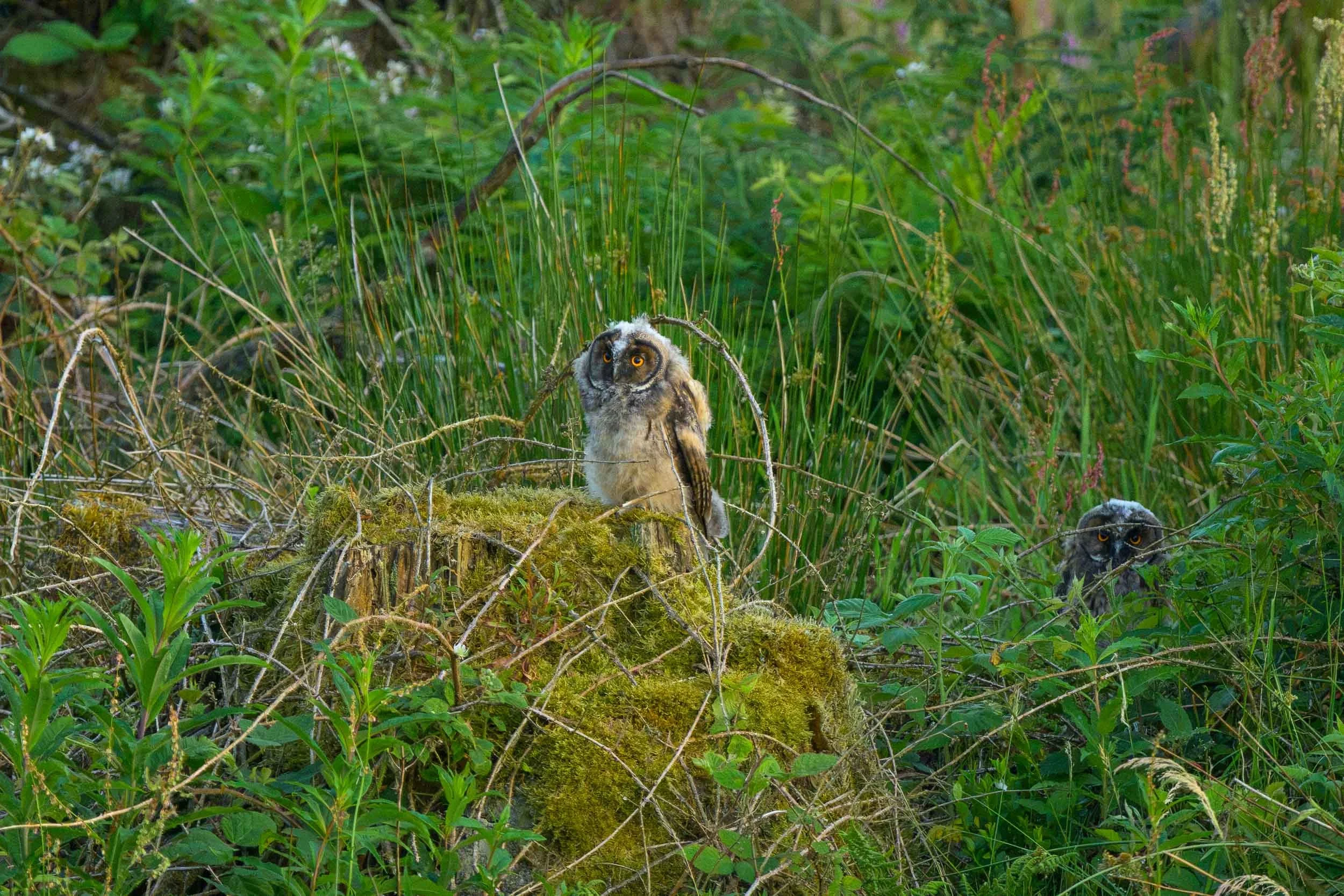
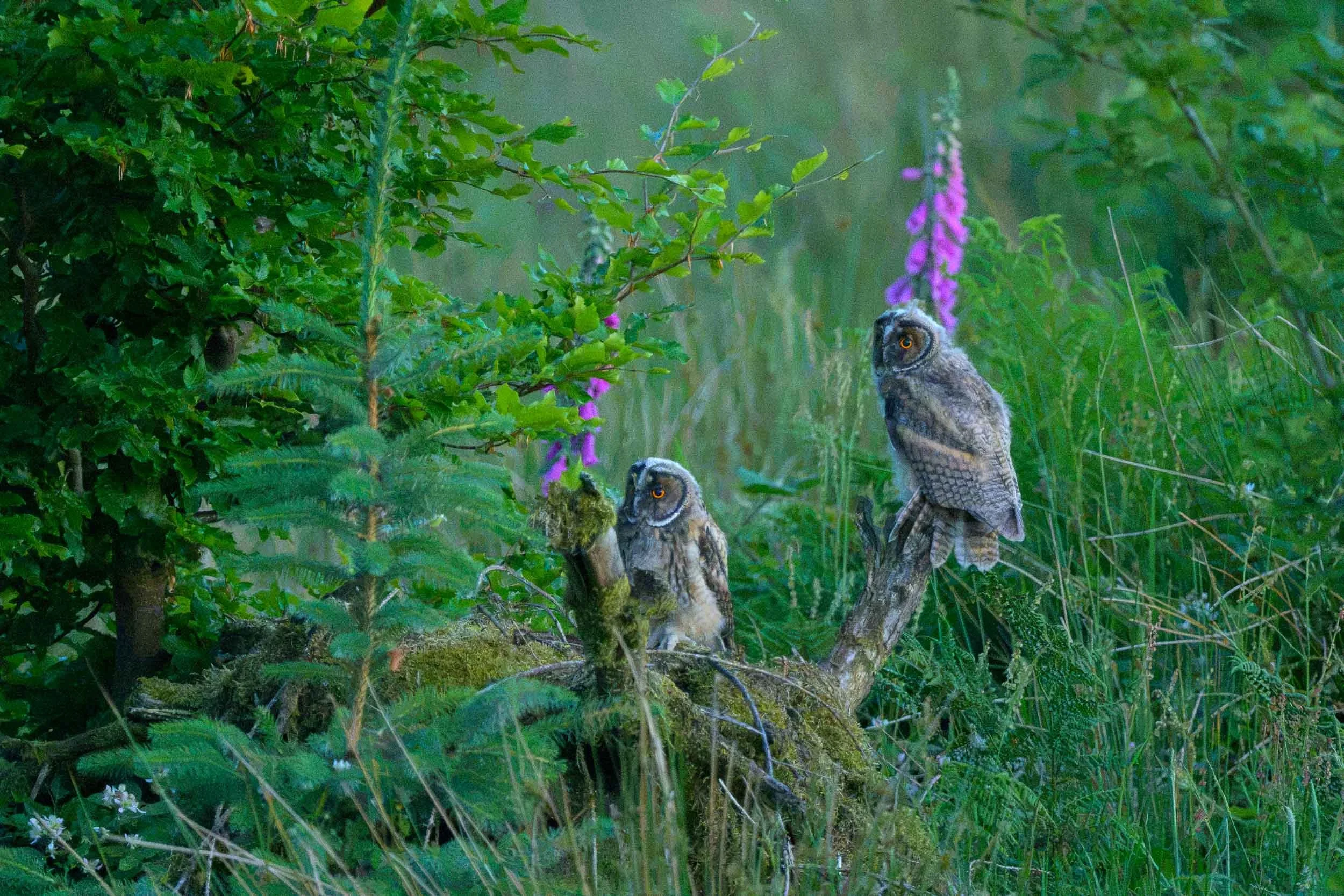
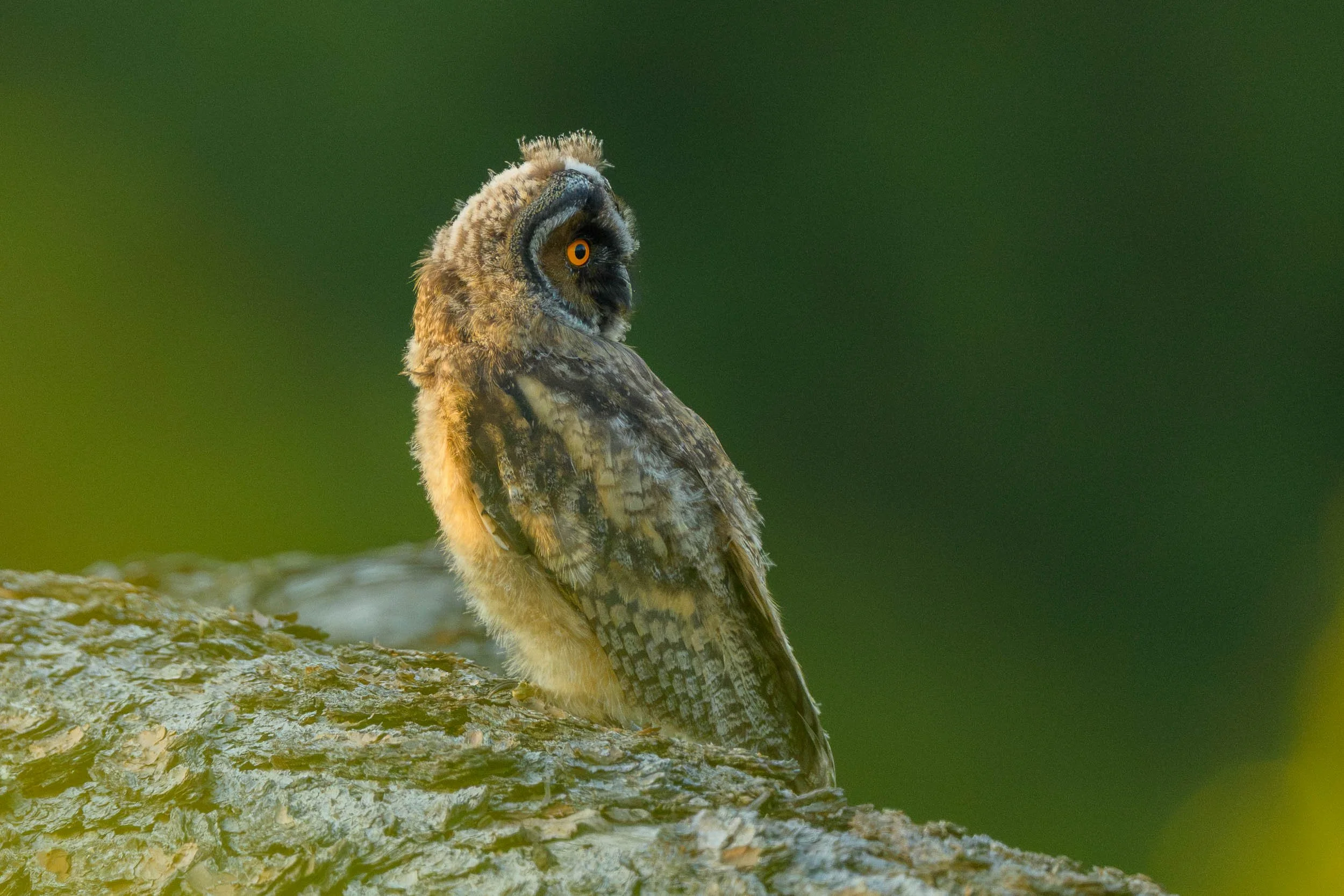
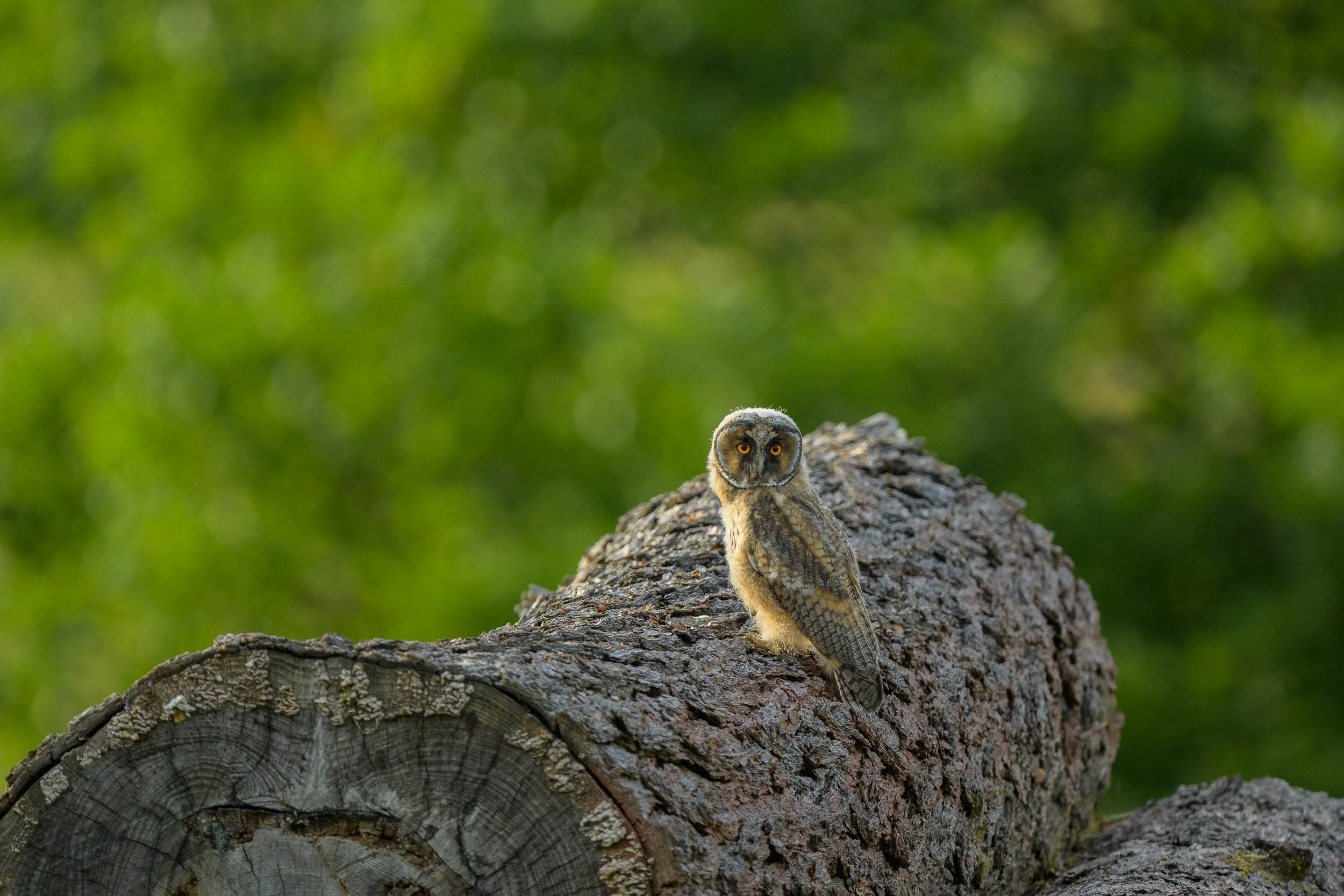
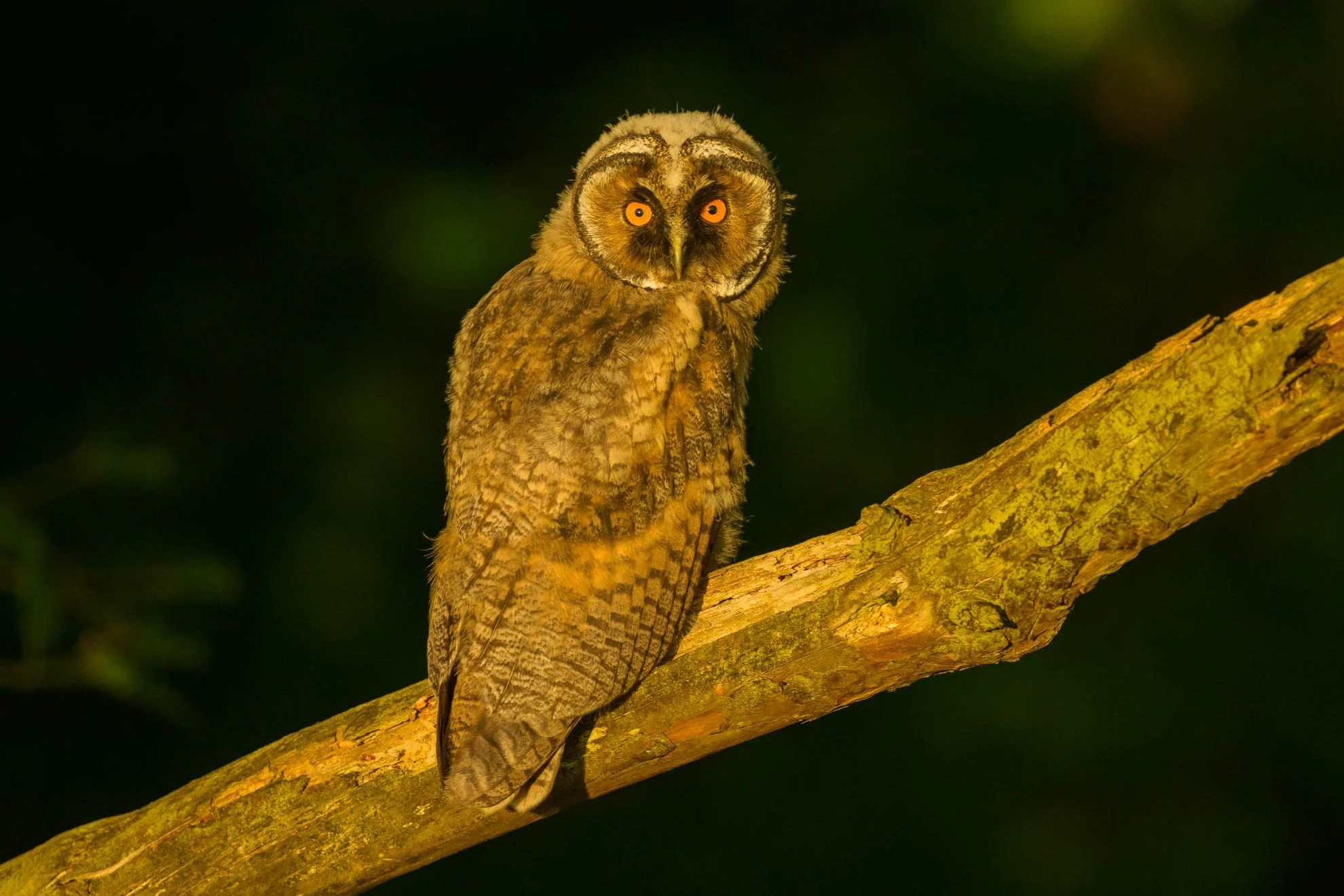
Long-eared owls are one of five species of owls that regularly breed in the UK, the others being barn owls, little owls, short-eared owls and tawny owls. As they are the most nocturnal of the UK’s owls, they are considered to be the most challenging of these five species of owls to photograph. Earlier this year, I spent many long days looking for, watching and photographing long-eared owls at several different locations during their breeding season. The locations were all very different, offered their own specific challenges but offered very different photographic opportunities.
Despite having a reputation for being the most nocturnal of the UK’s species of owls, I was fortunate to find several locations where the long-eared owls were active during the day.
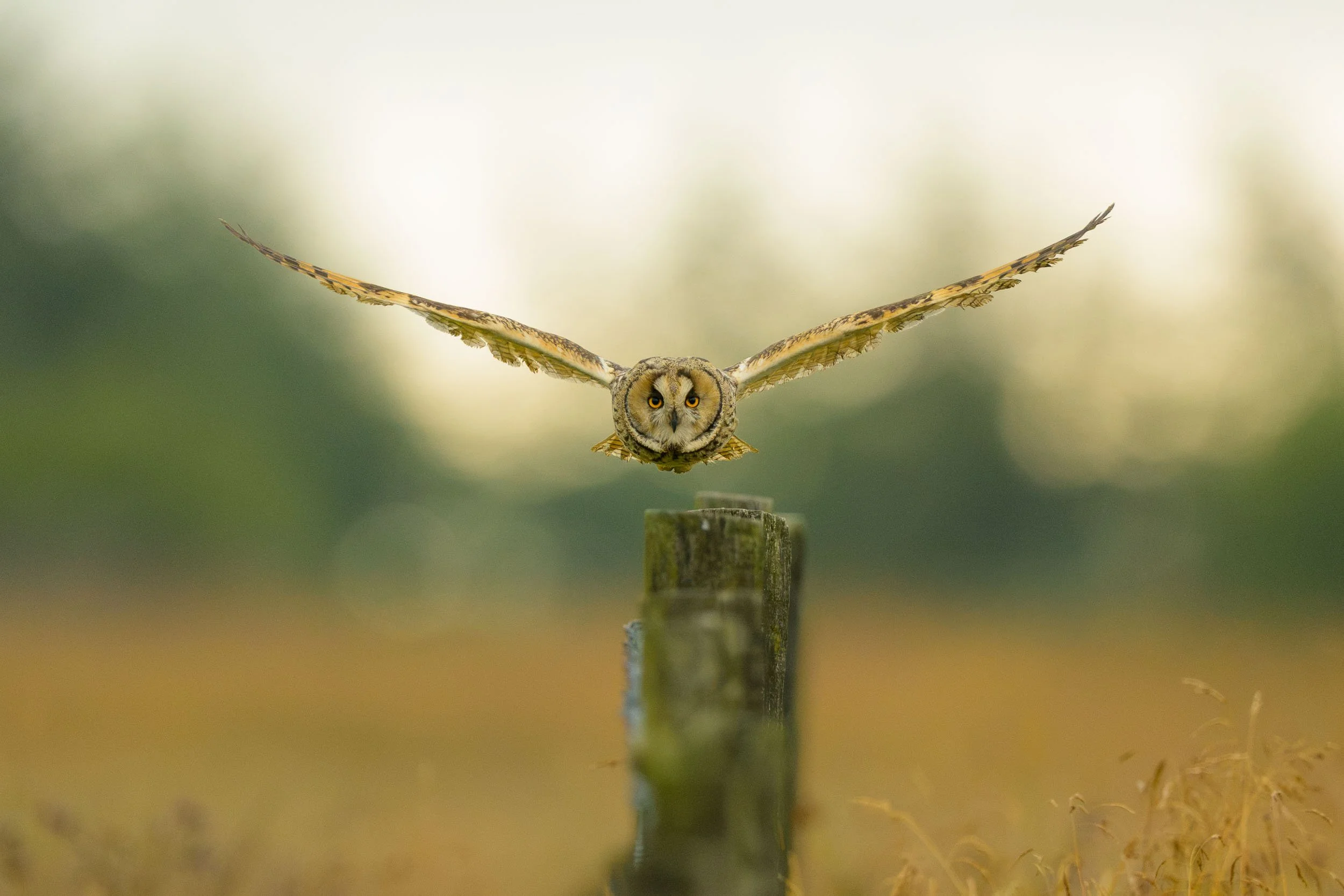
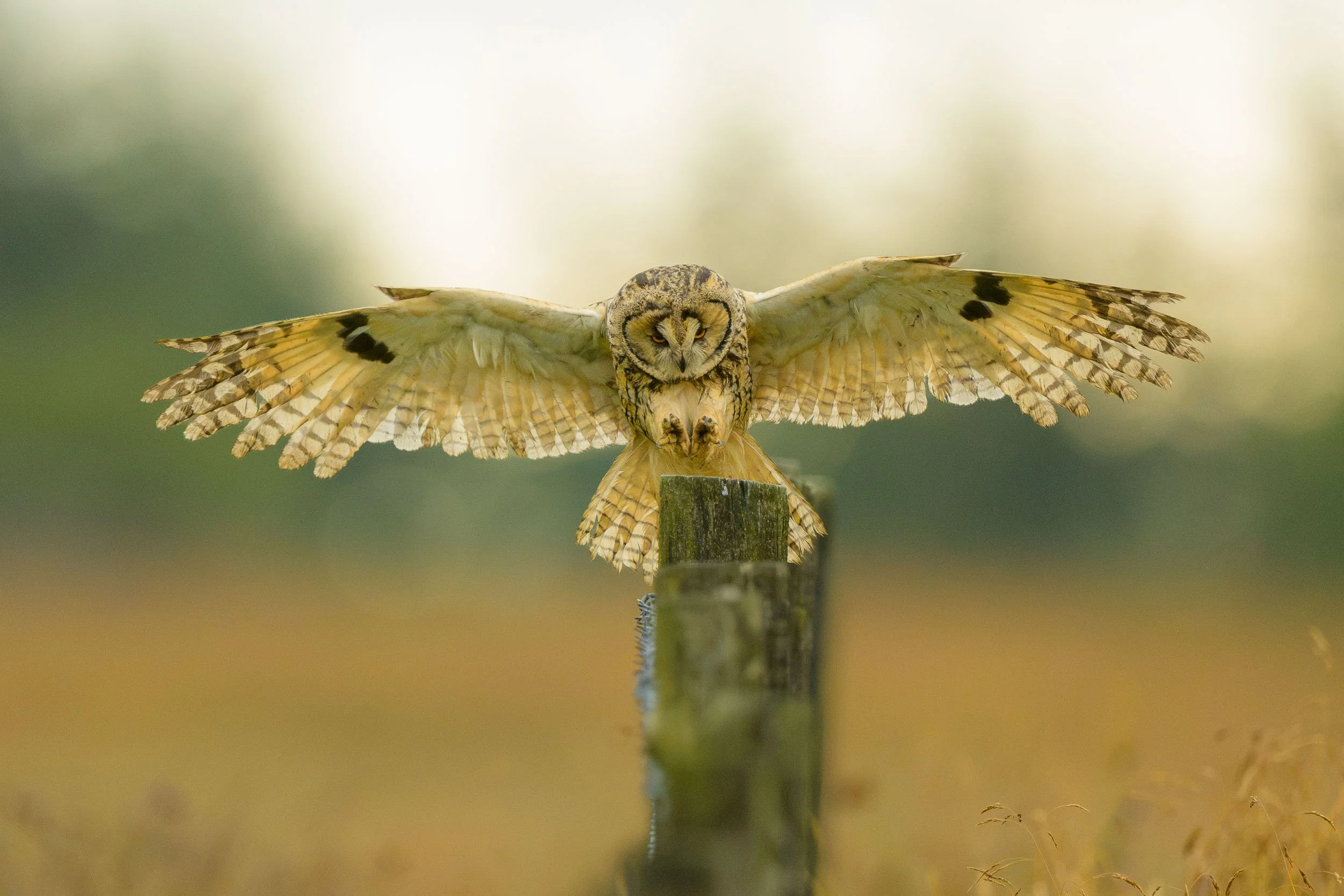
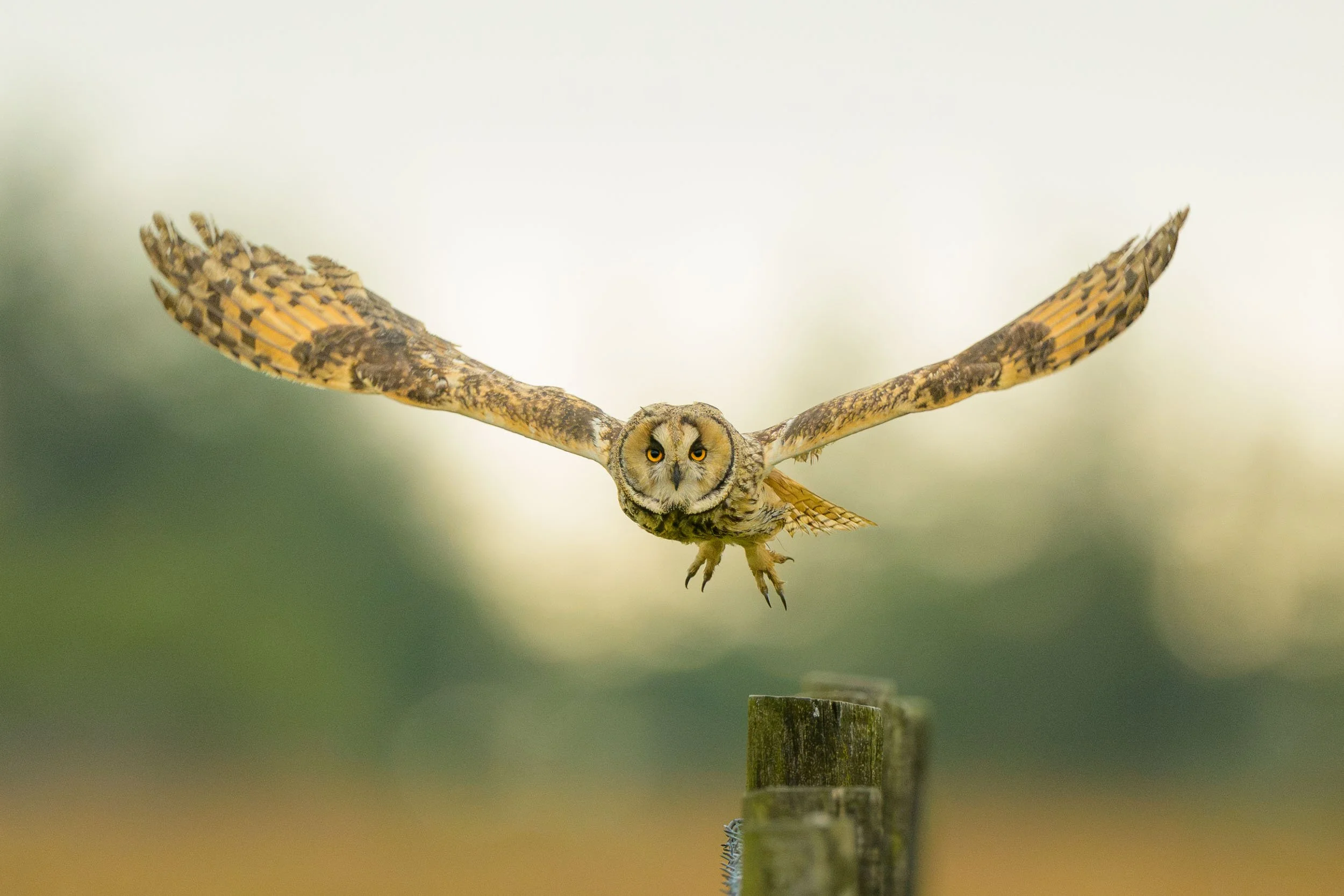
Of all the owls species in the UK, I have found that long-eared owls can be the most tolerant of humans. With care, it is possible to approach these owls without the need to use a hide. Certain of the long-eared owls I worked with would fly close by and would land and perch near to where I had set up to photograph from. Even with this tolerance of humans, great care has to be exercised when photographing long-eared owls so that they are not disturbed, particulaly when have and are feeding dependant young.
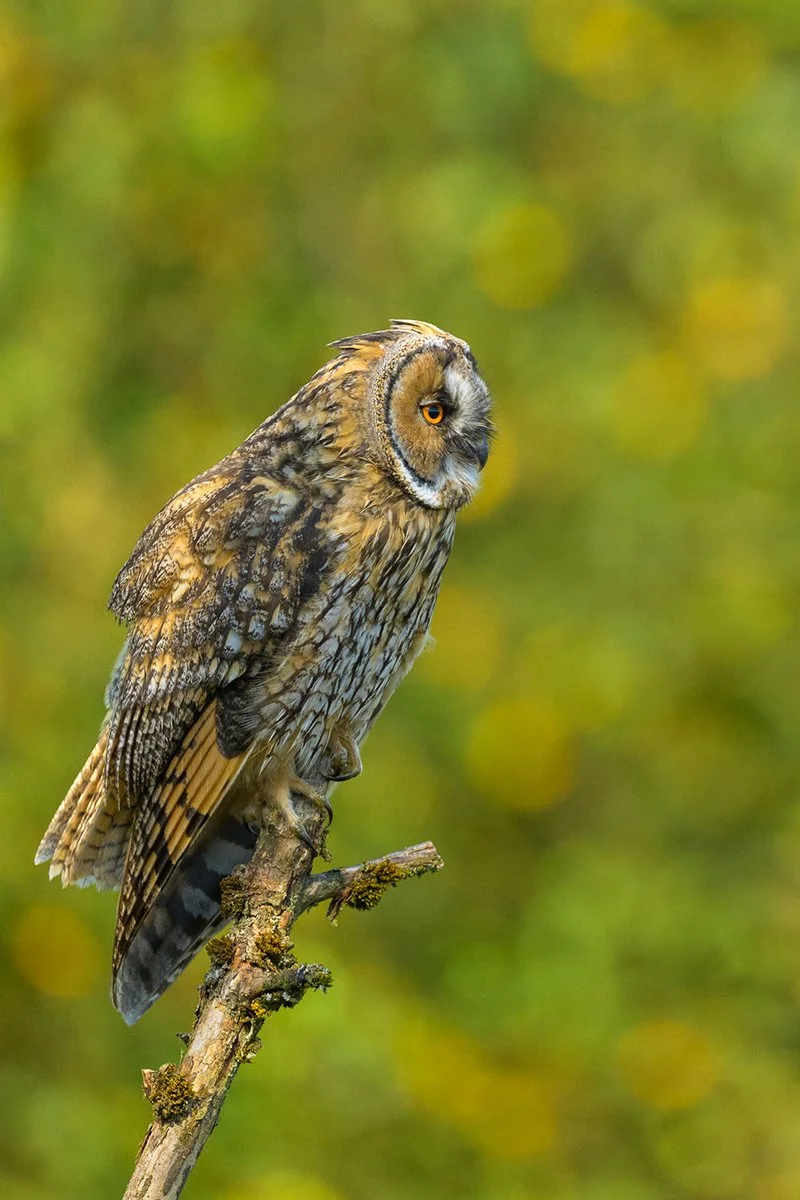
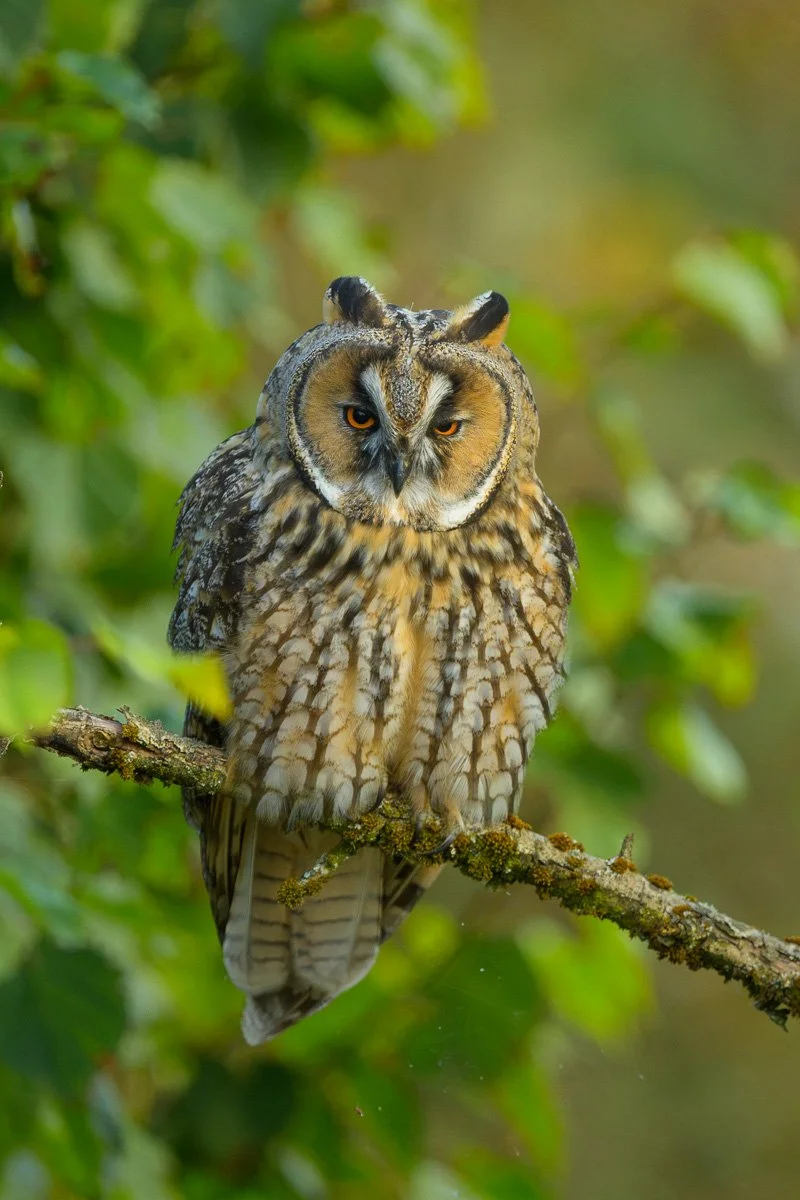
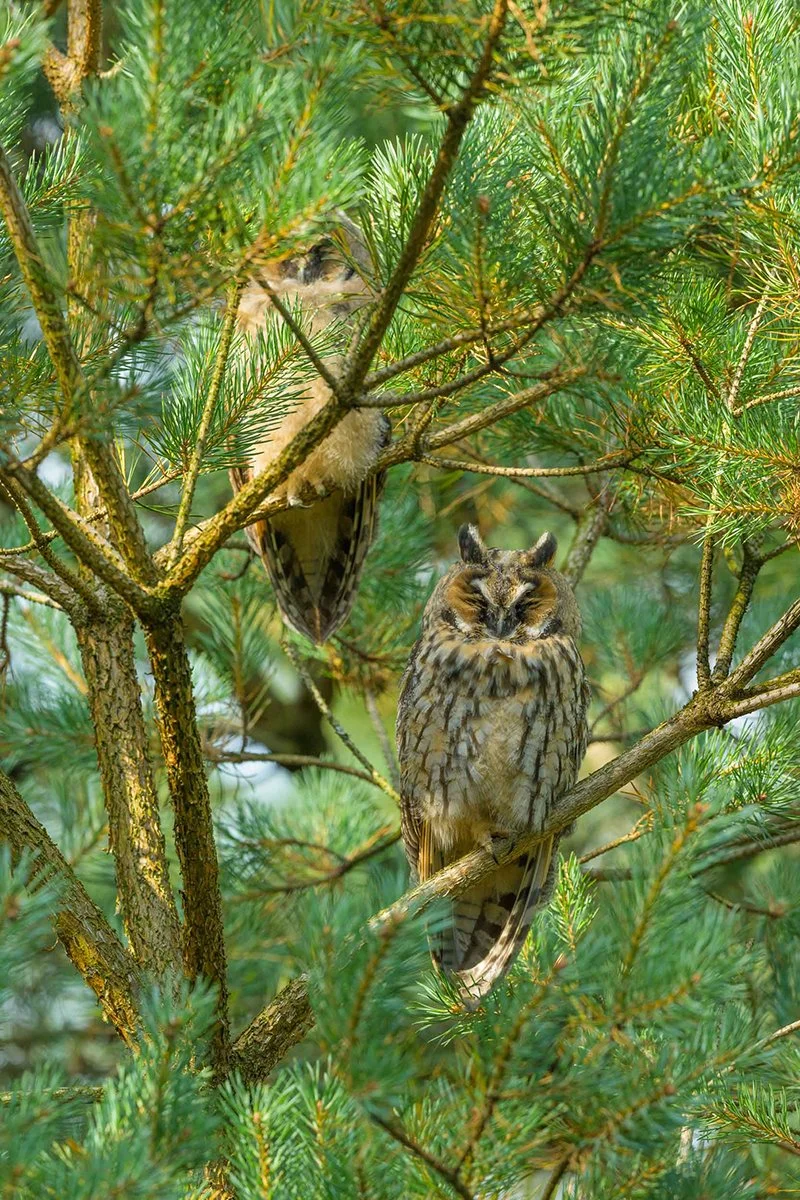
Over the time I worked with them, I watched the young long-eared owls grow, become more independant and to start to hunt for themselves.
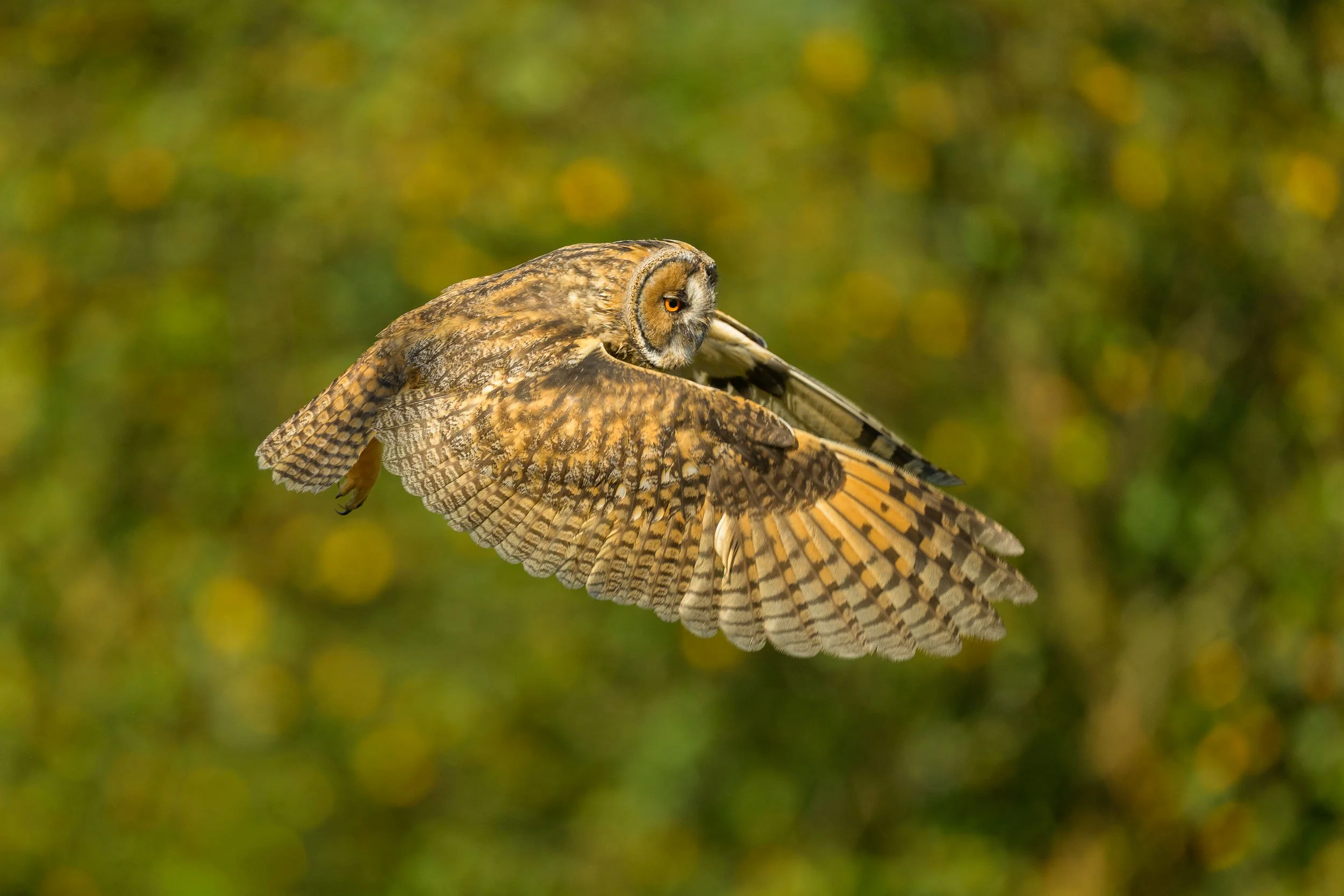
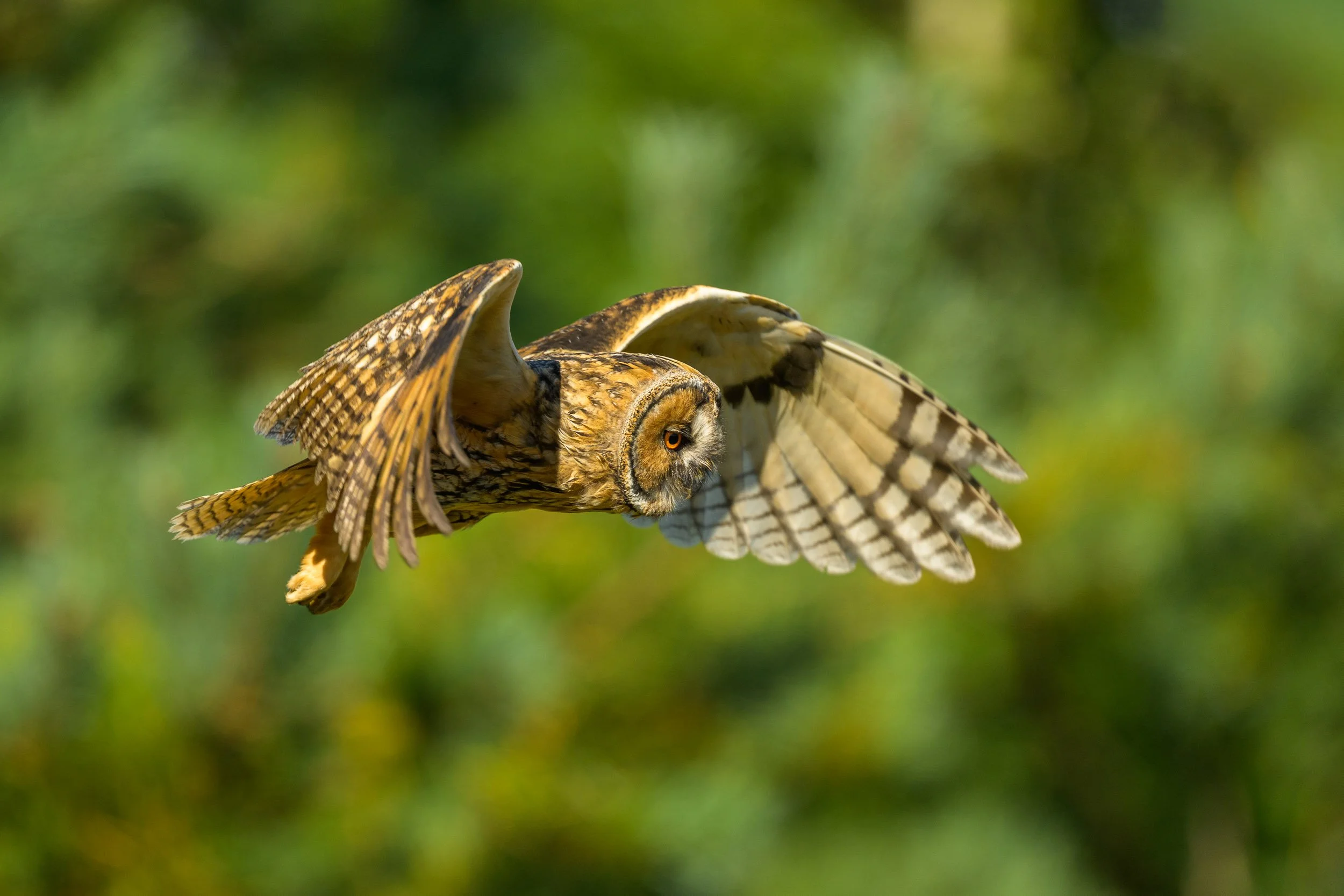
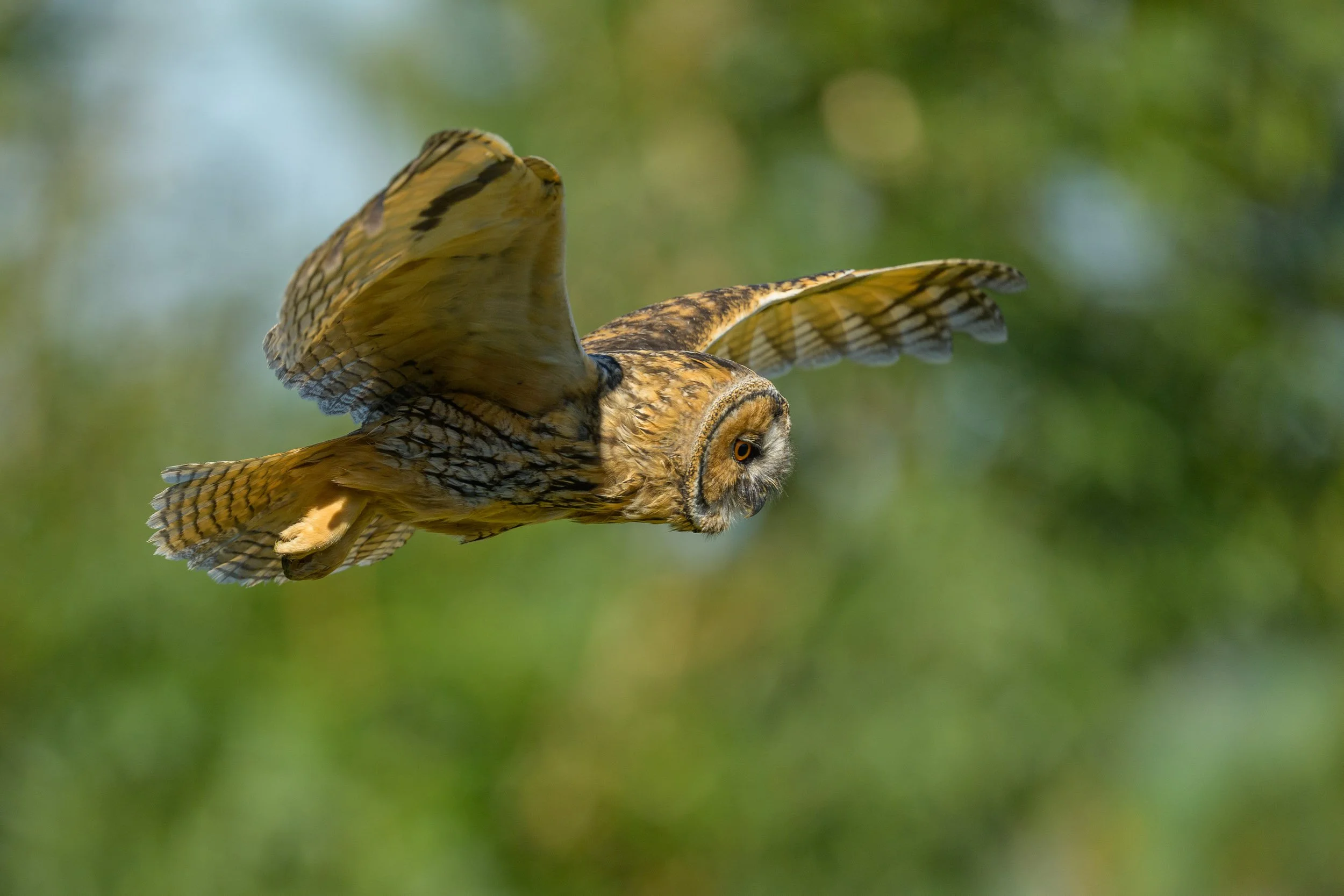
Over the months I watched the long-eared owls hunting over fields and meadows in the morning and evenings, I was able to work out their preferred hunting areas and behaviour. British long-eared owls predominantly hunt field voles with wood mice and bank voles being prey to a lesser extent. Small birds are hunted by long-eared owls outside of the breeding season where it is presumed that they are taken from their overnight winter roosts.
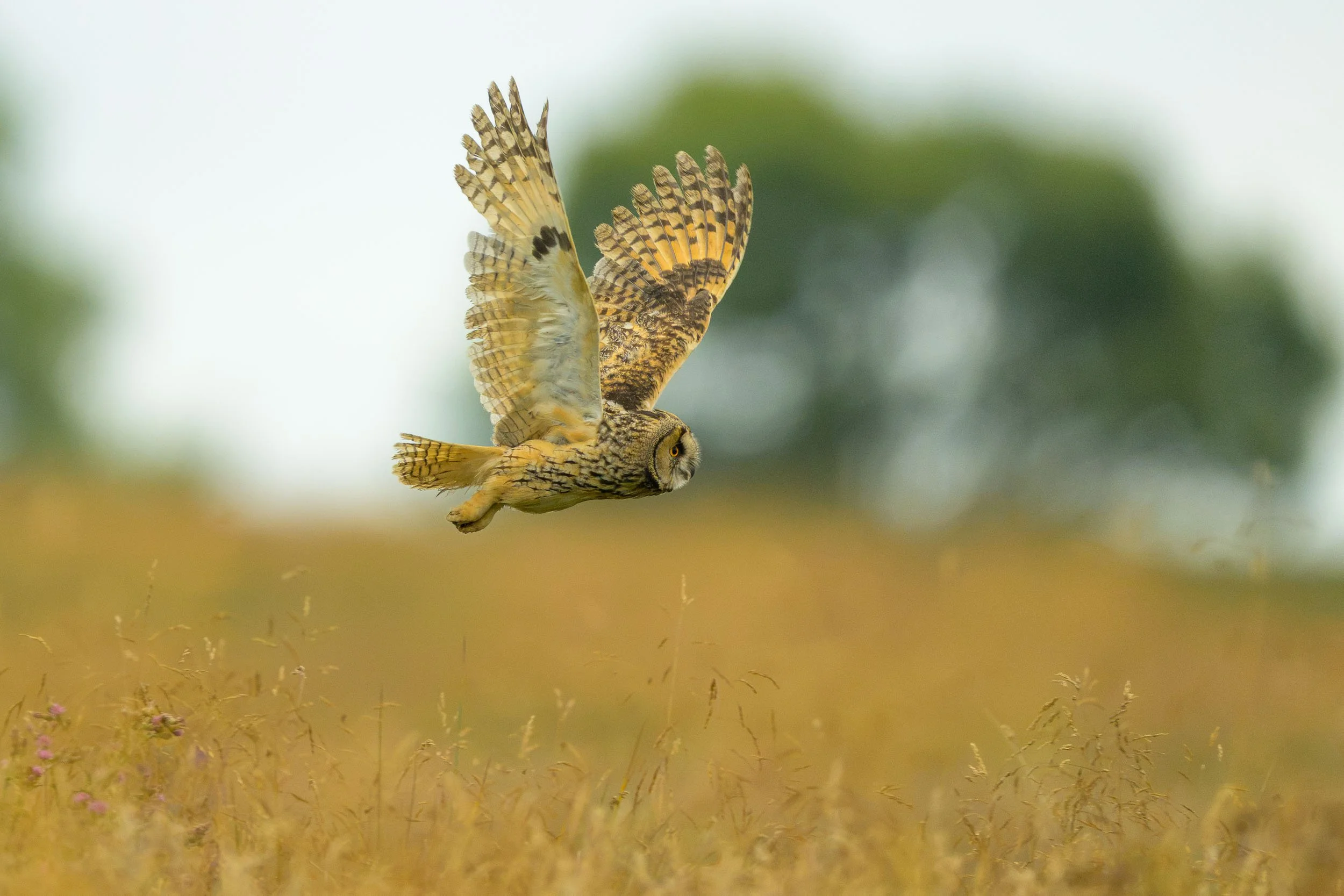
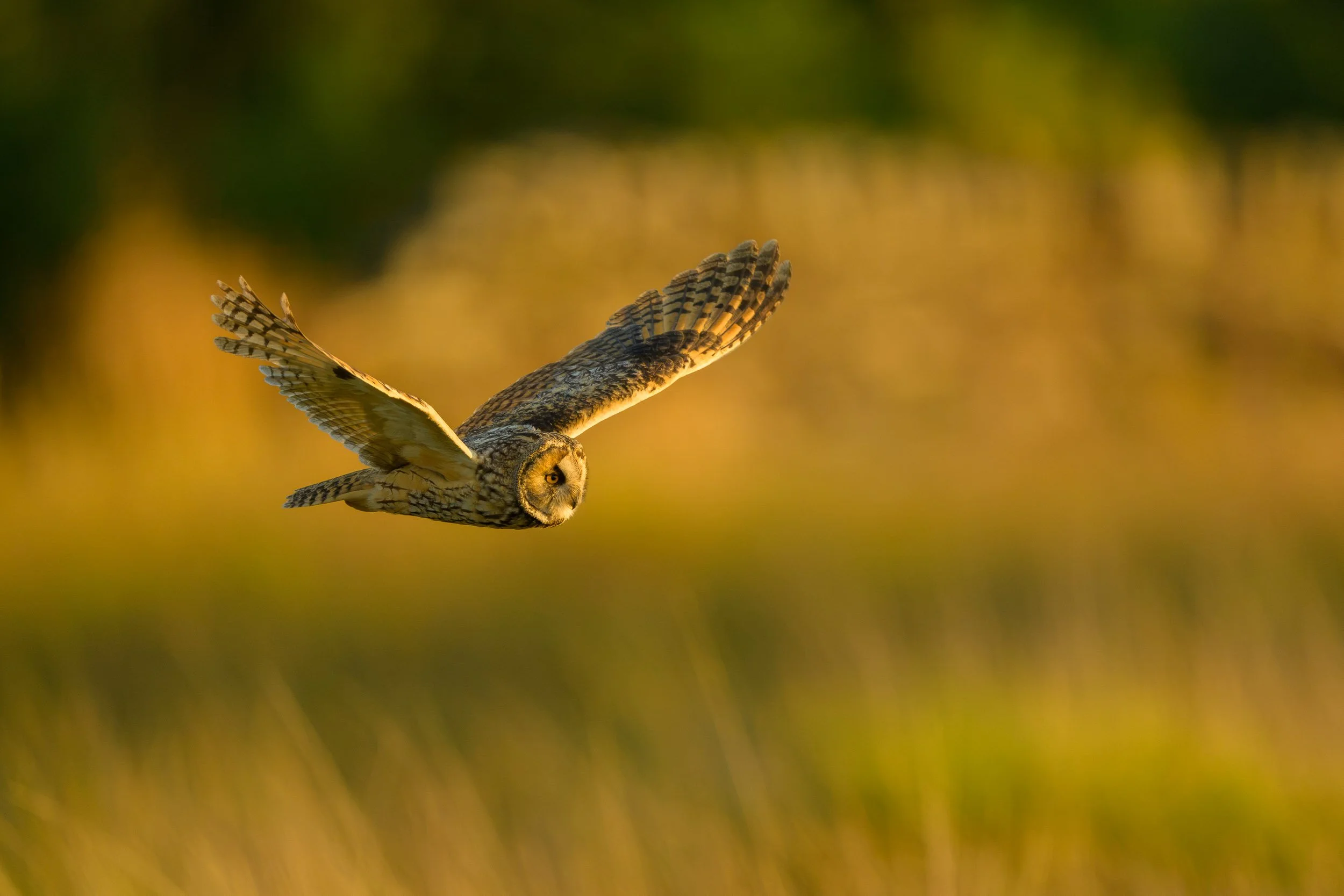
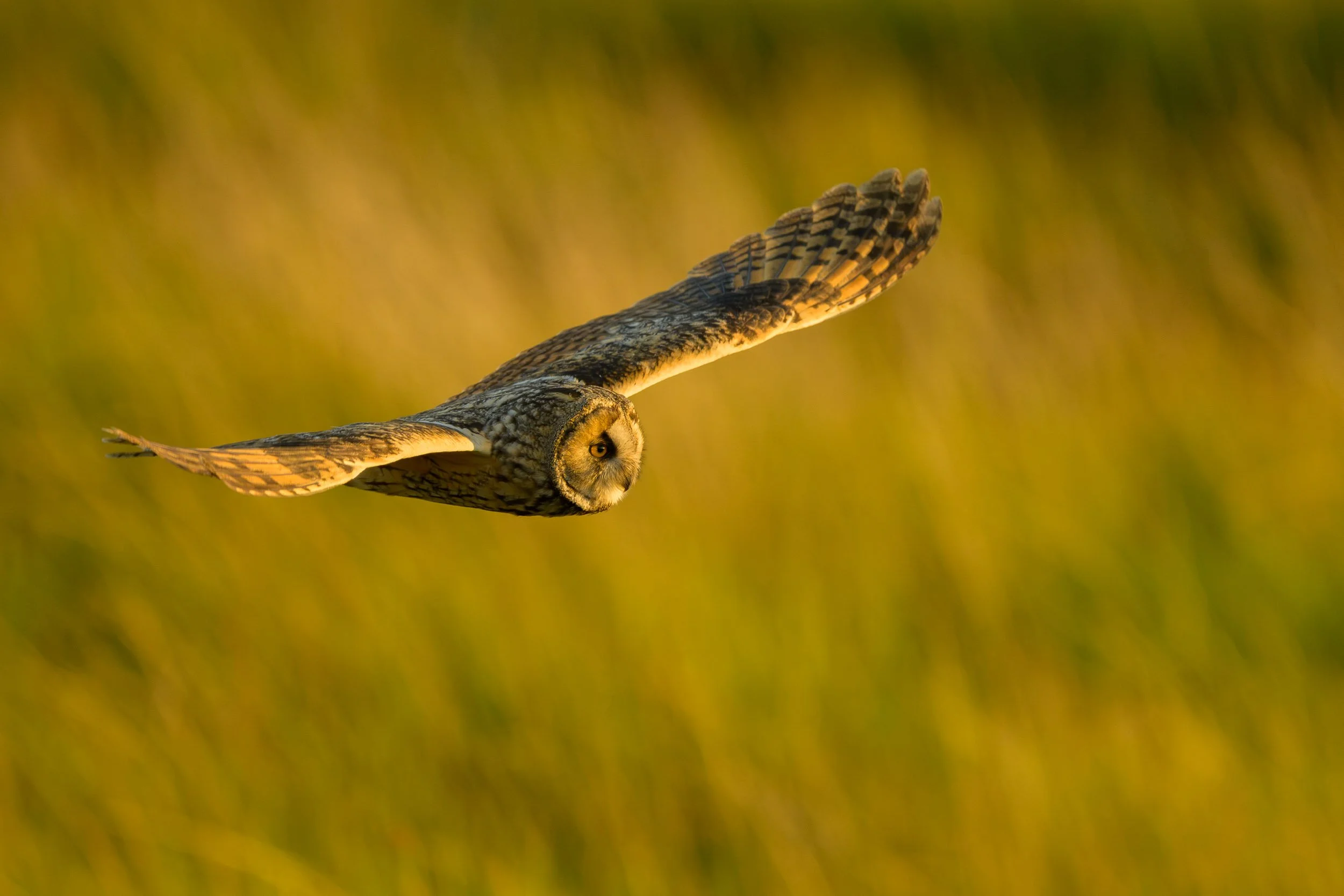
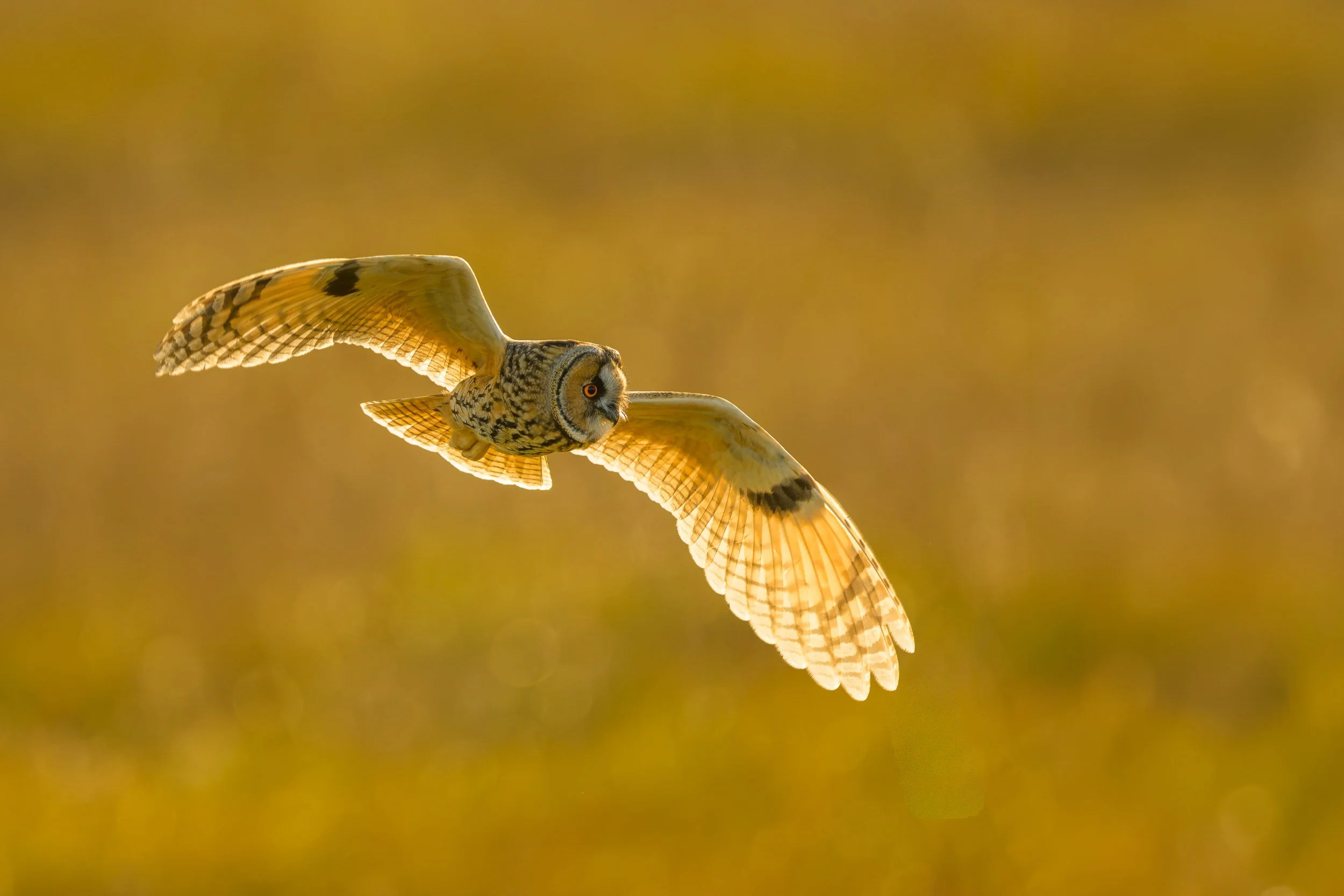
With their translucent wing feathers, photographing long-eared owls backlit against the warm sun as they hunt low over a meadow at dusk or dawn, makes for stunning images of these beautiful owls in flight.
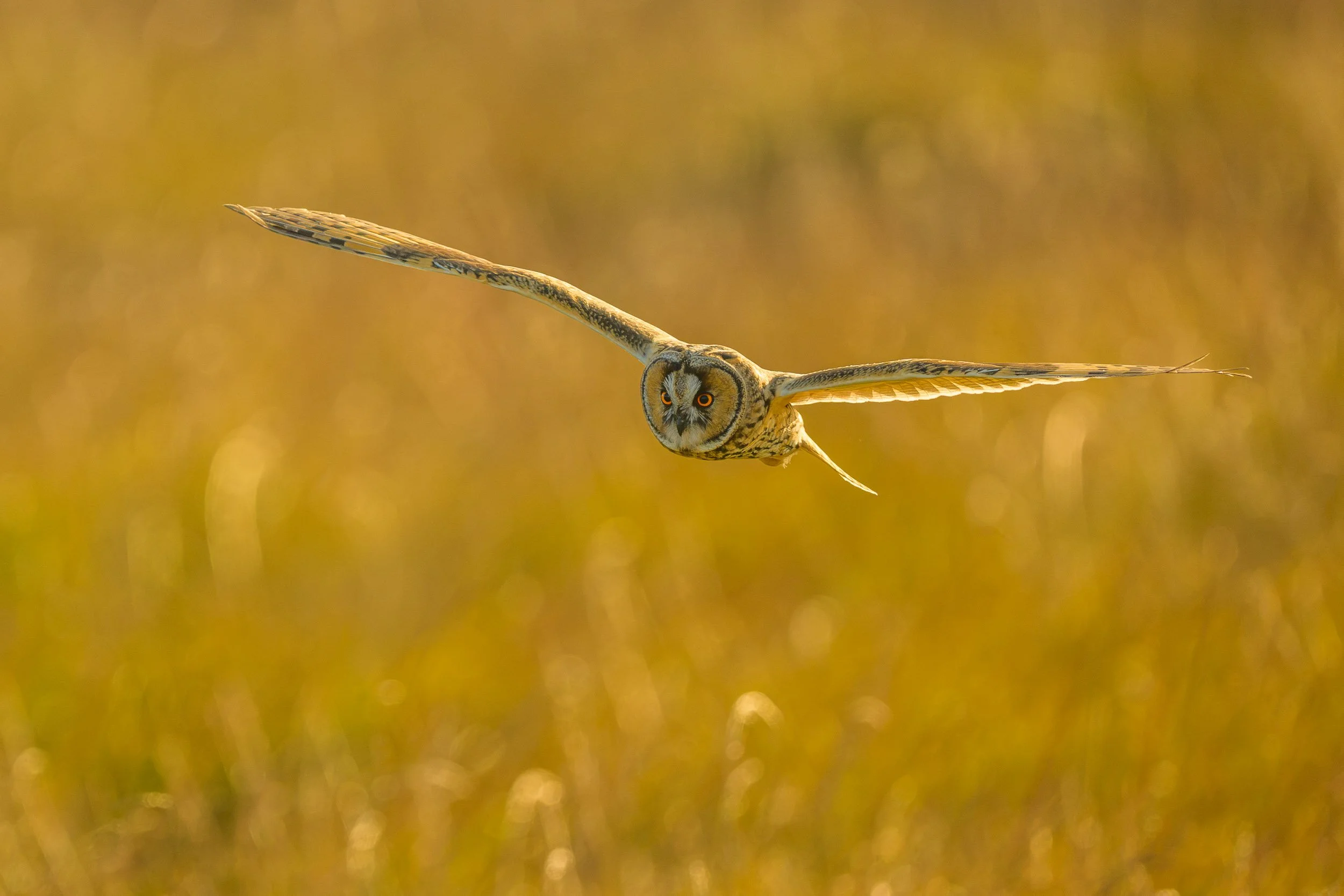
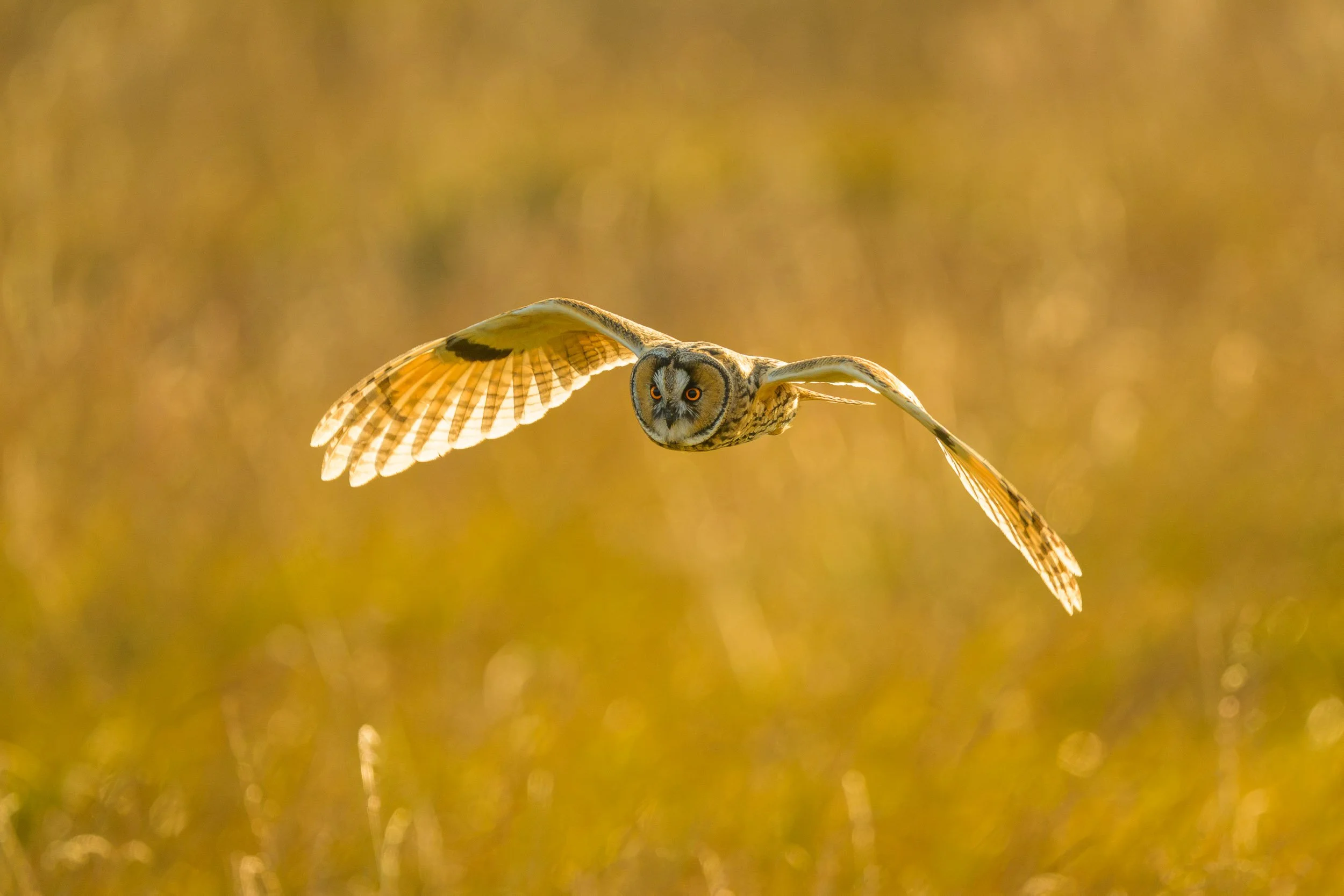
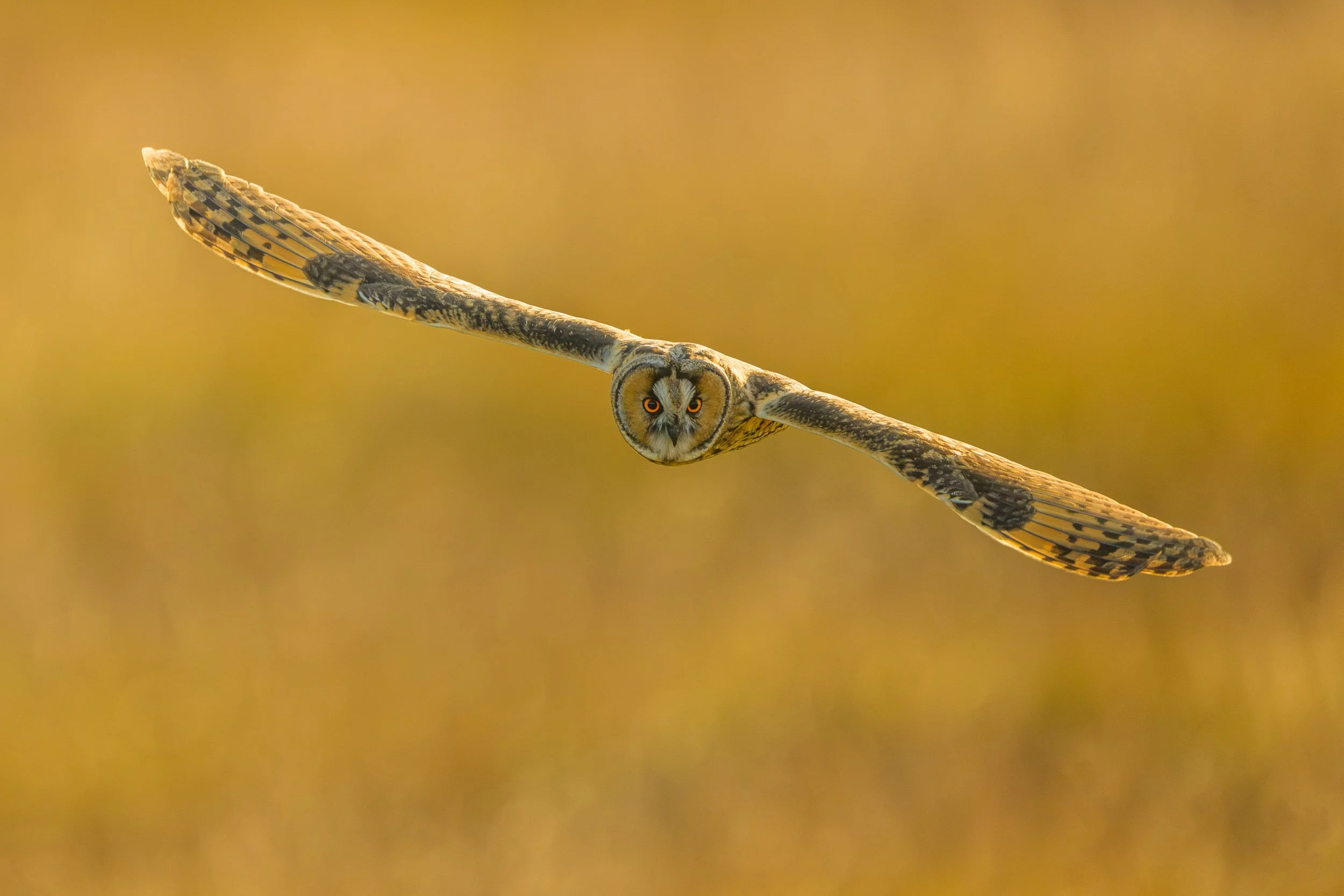
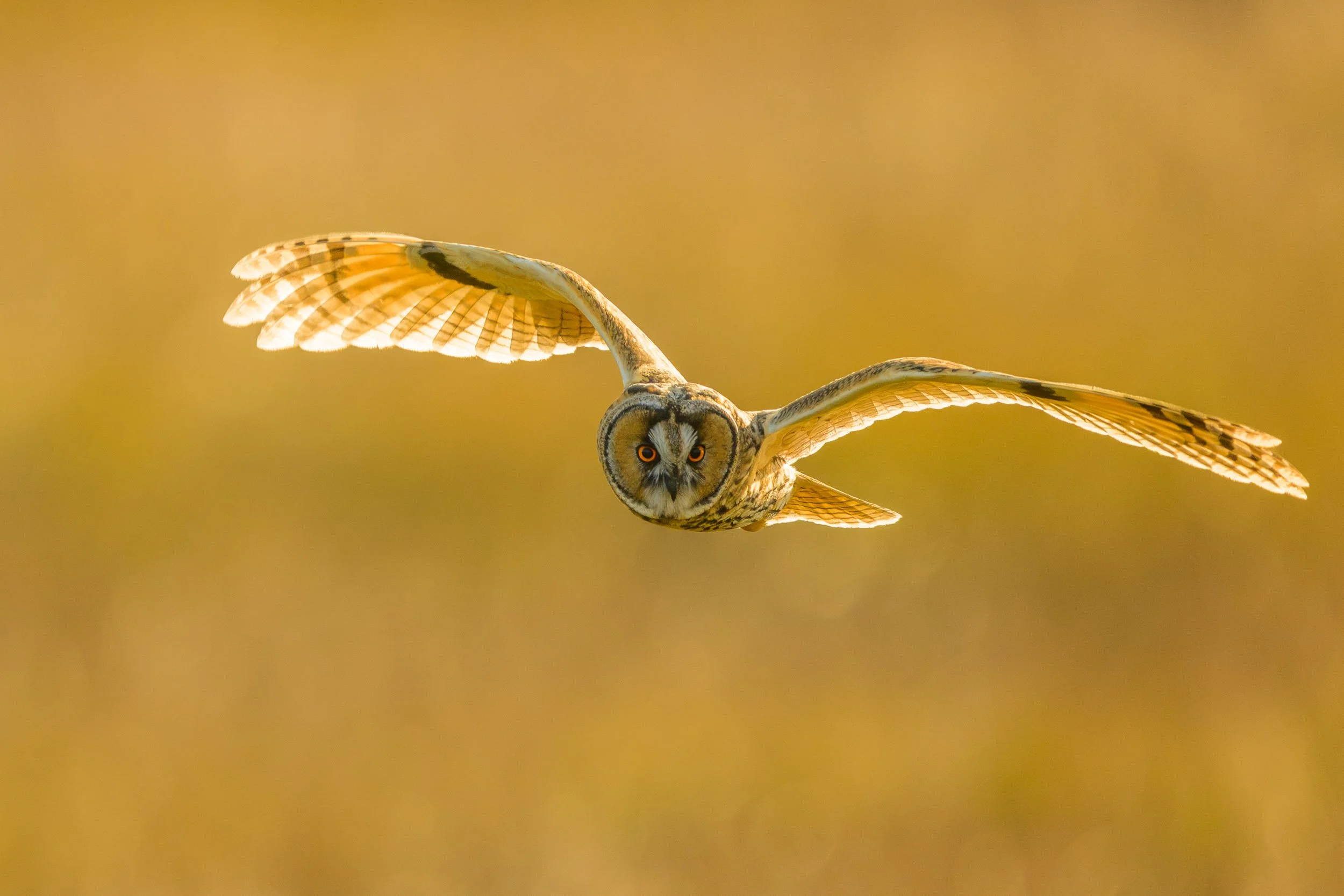
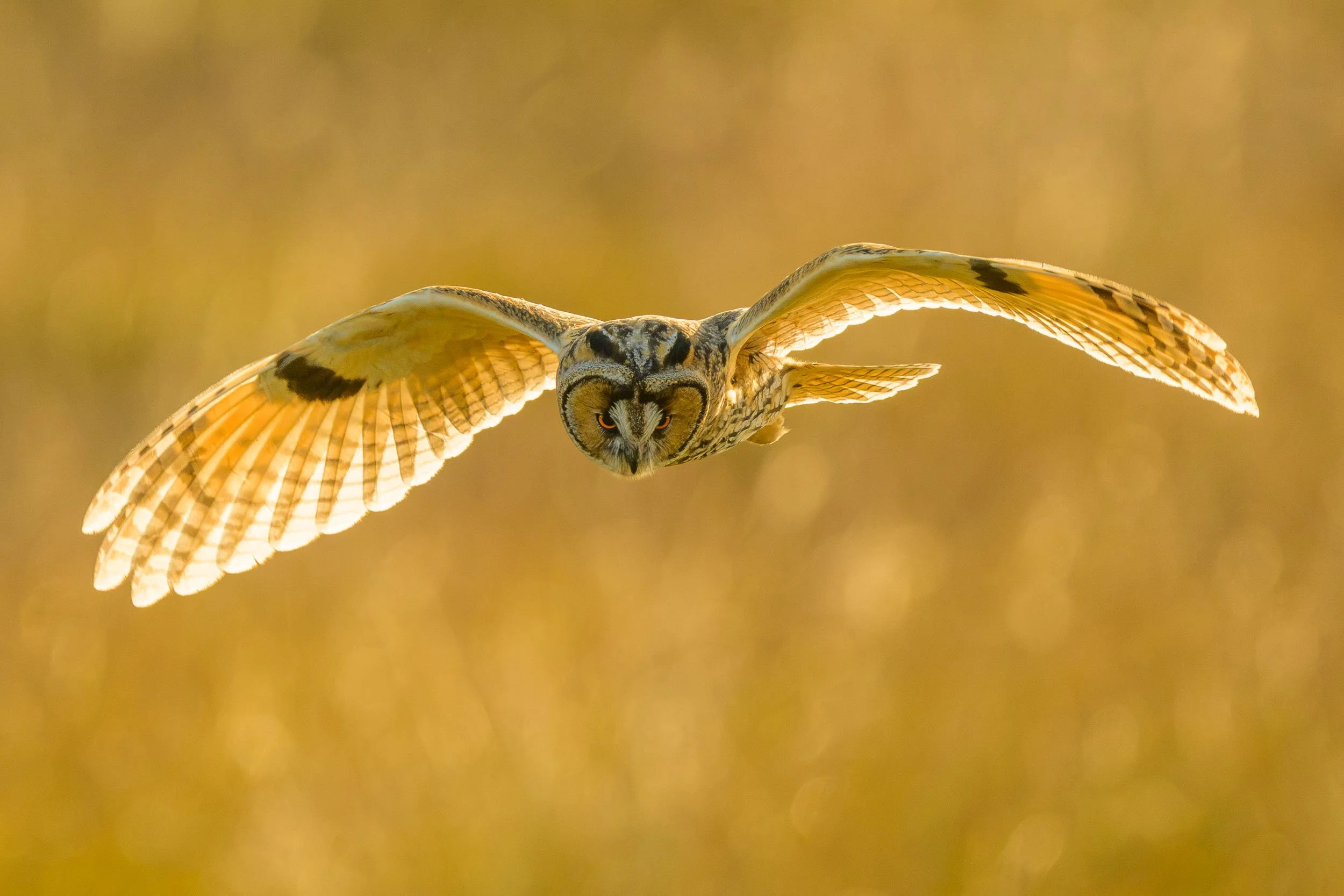
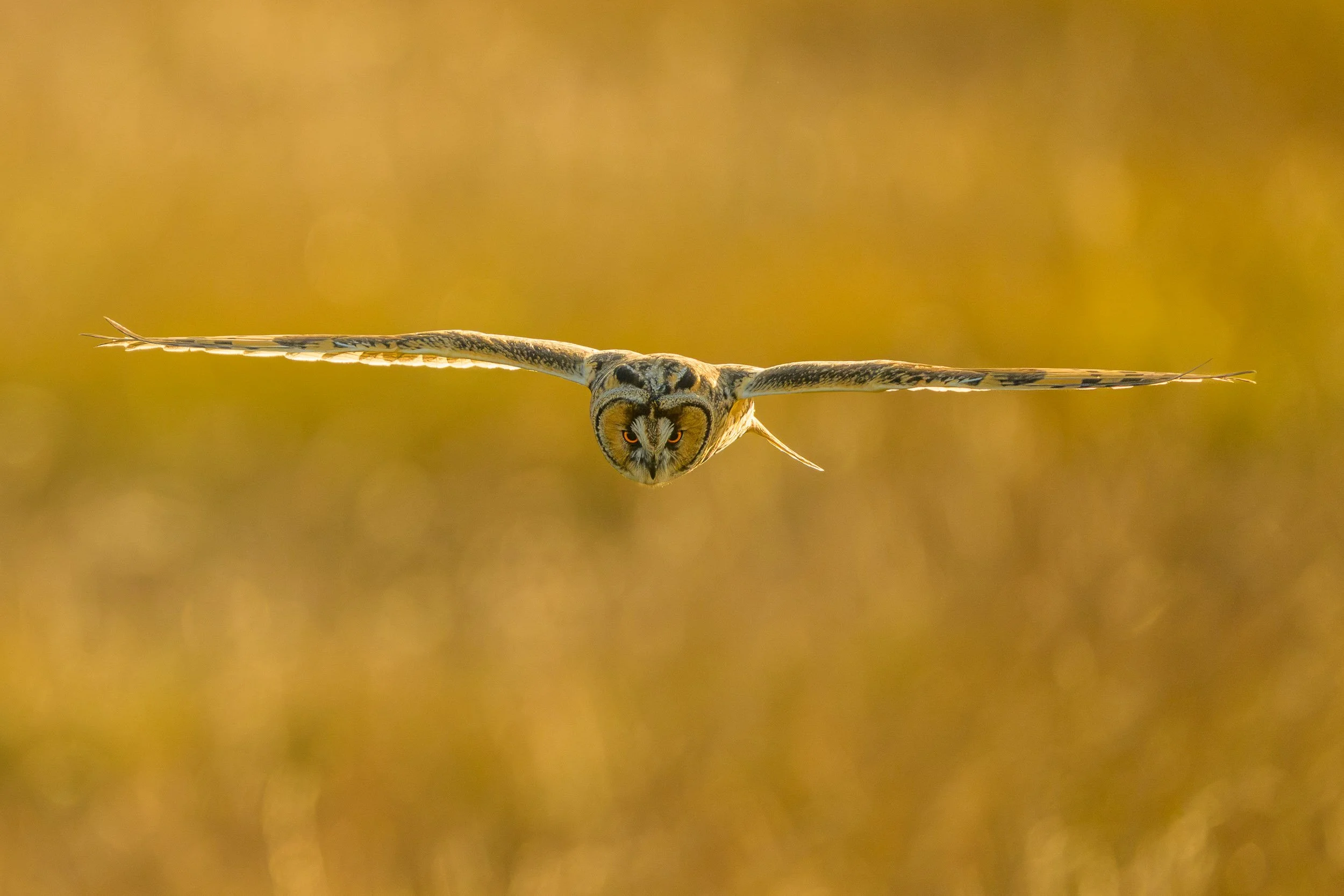
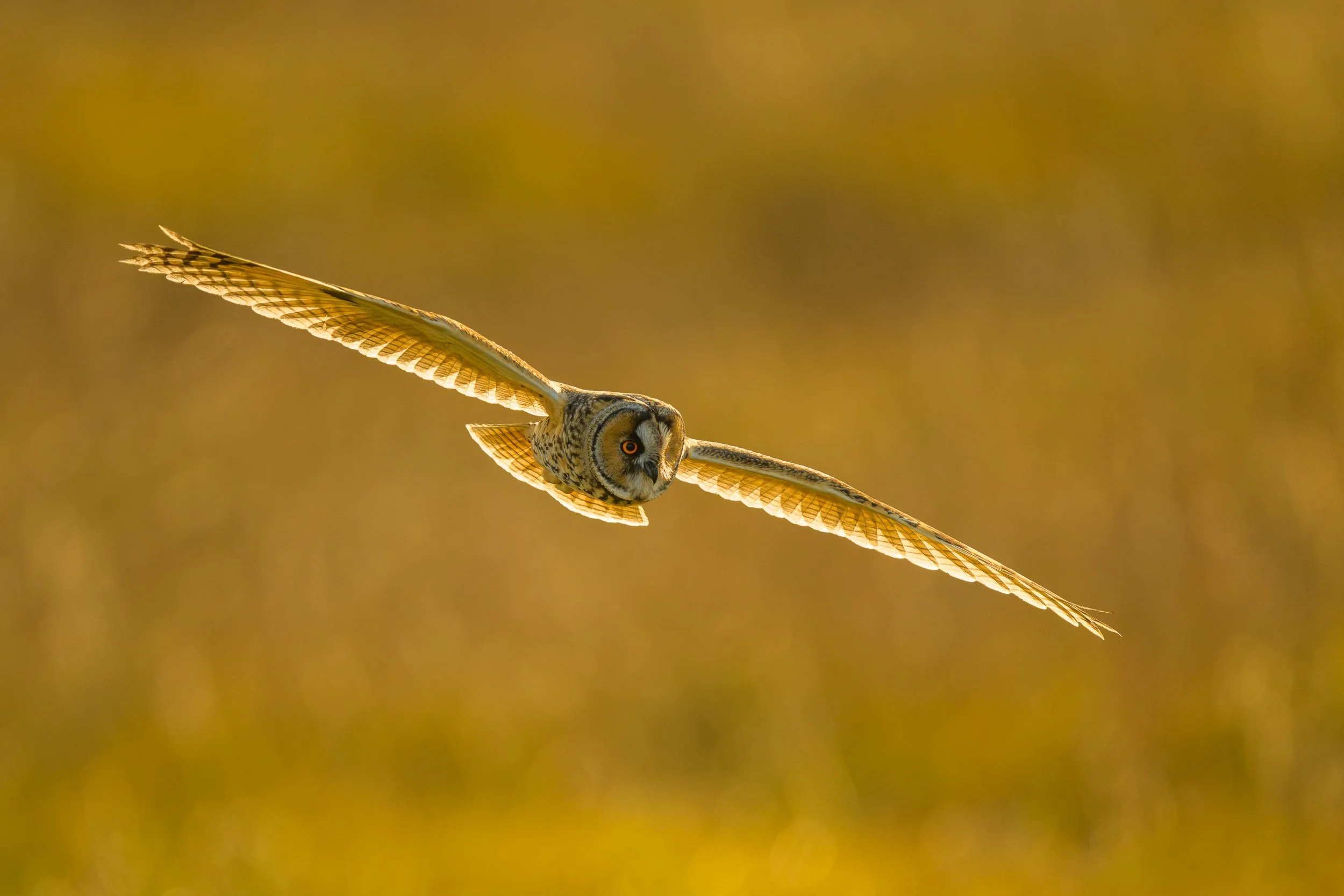
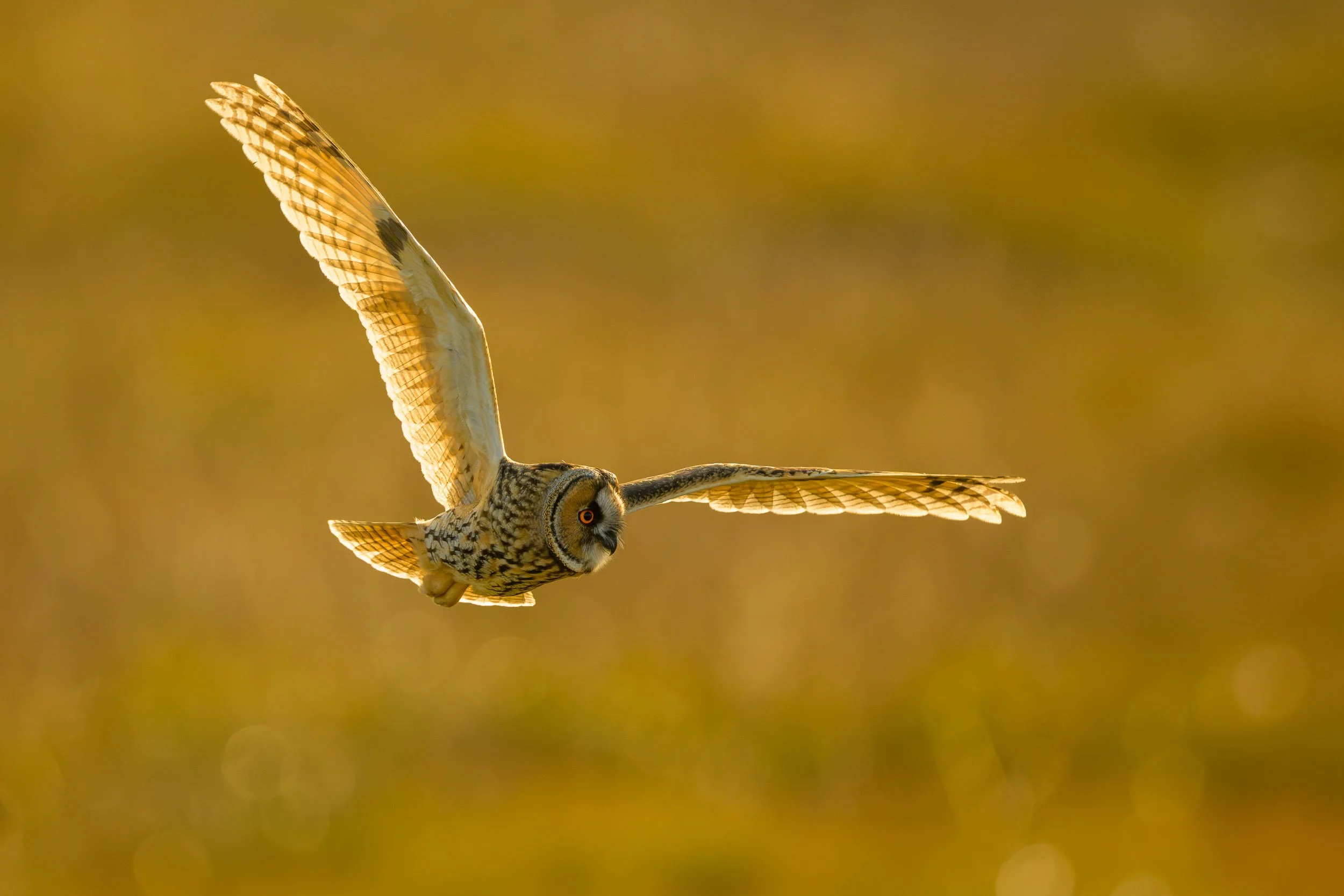
Long-eared owls, particularly when their “ear tufts” are raised, have a very distinctive shape making for great images of these owls silhouetted against the sky.
With the onset of winter, the UK’s population of resident long-eared owls is joined by migrant owls from Scandinavia. Although breeding long-eared owls may retain a territory throughout the year, they can be found in communal roosts during the winter months.
The work undertaken earlier this year on photographing long-eared owls was both challening and incredibly rewarding. Spending time with these long-eared owls was an incredibly priviledge,
Photography Notes: All of the images of long-eared owls in this post were made using a Nikon Z9 and Nikon Z 600mm f/4 TC VR S lens, which were either mounted on a tripod with a fluid video head or, particularly for images of the owls in flight, handheld. The use of this super-telphoto lens, with its internal 1.4 teleconverter, allowed me to photograph the long-eared owls from a safe distance so as not to cause any disturbance to them. At one location, I also photographed the long-eared owls from a camouflaged bag hide that covered me and the camera, lens and tripod.
NB: By clicking on the individual images and image galleries in this post, they open into a larger lightbox for better viewing.
